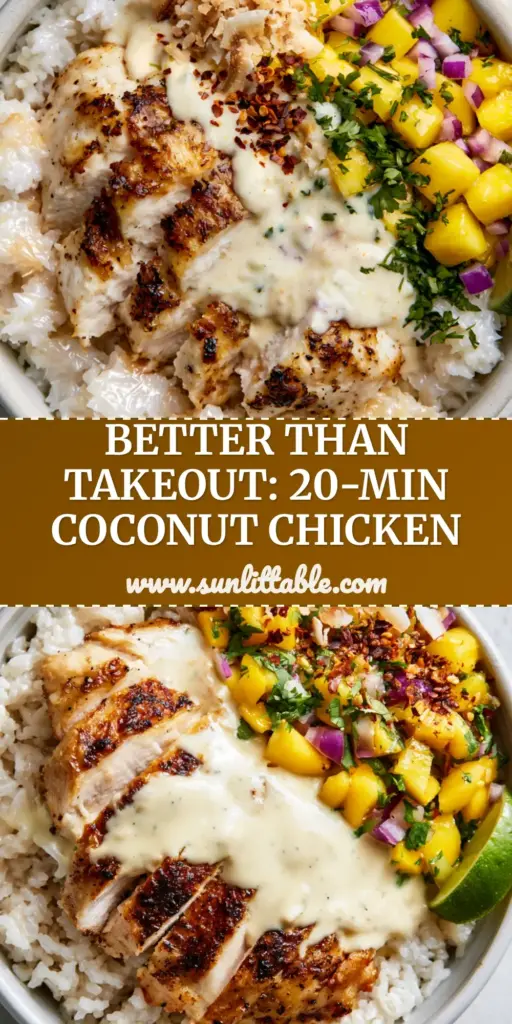
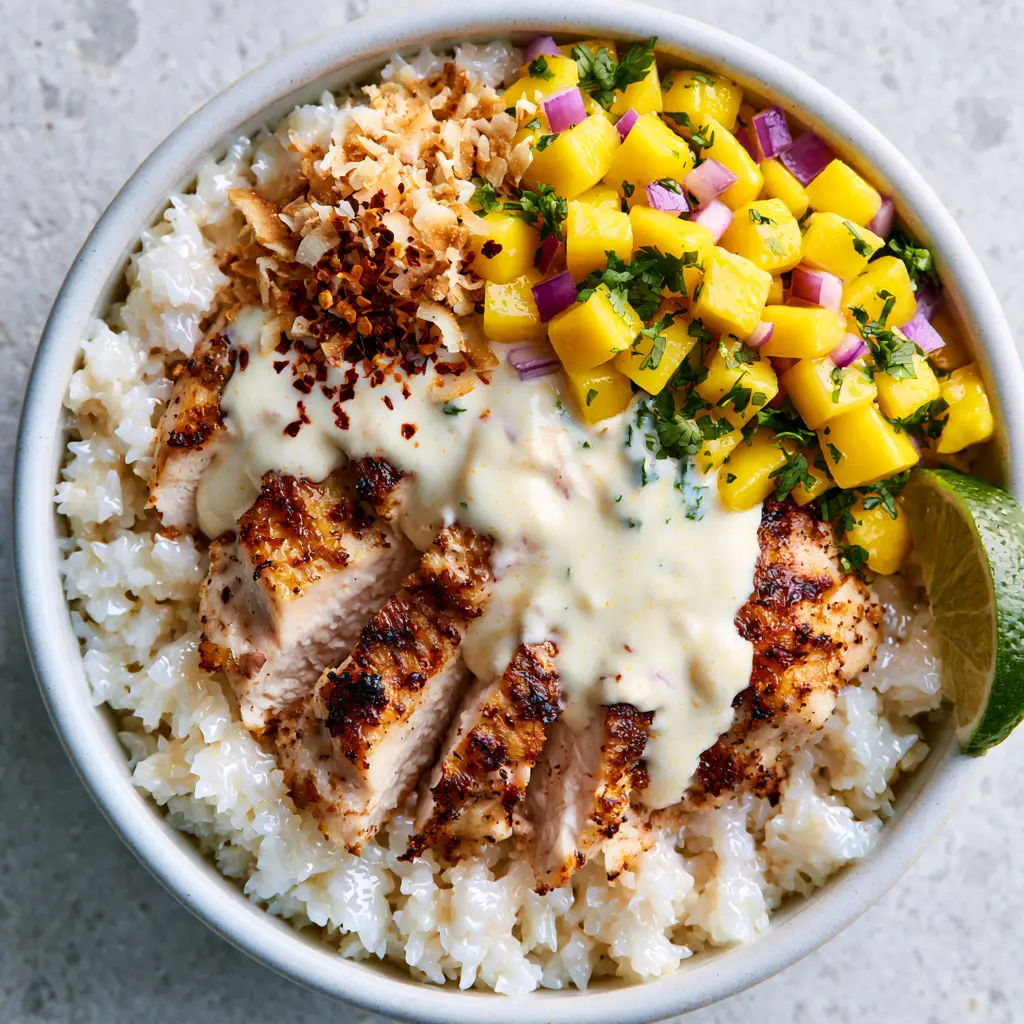
There is a specific kind of magic that happens when the tropical sweetness of fruit meets the savory, caramelized depth of perfectly seared poultry. This coconut chicken rice bowl is the ultimate expression of that harmony, offering a multi-sensory experience that transports you to a sun-drenched coastal retreat with every bite. From the glistening, fluffy white grains of coconut-infused jasmine rice to the succulent chicken breast seared to a deep golden-brown, every component has been designed for maximum flavor impact.
What sets this coconut chicken rice bowl apart is the forensic attention to texture and contrast. You aren’t just eating a meal; you are navigating a landscape of creamy coconut reductions, vibrant mango salsa, and the satisfying crunch of toasted coconut shavings. The gentle heat from dried red chili flakes cuts through the richness of the coconut milk, while fresh lime wedges provide the essential hit of acid that wakes up the entire palate.
Whether you are looking for a high-protein dinner that feels like a luxury resort meal or a sophisticated meal-prep option that actually tastes better the next day, this recipe delivers. We have engineered this dish to ensure that the chicken remains juicy and the rice stays fluffy, avoiding the common pitfalls of soggy grains or dry meat. Let’s dive into the culinary science and techniques required to master this tropical masterpiece.
Why You Will Crave This Tropical Coconut Chicken Rice Bowl
- Succulent Golden Sear: We utilize a high-heat searing technique to achieve those visible caramelized edges on the chicken breast, ensuring a savory crust that locks in moisture.
- Creamy Ivory Reduction: The velvety coconut cream sauce isn’t just a drizzle; it’s a concentrated reduction of full-fat coconut milk that coats the chicken in a rich, silken layer.
- Textural Contrast: Between the soft, diced ripe yellow mango, the finely minced red onion, and the crisp toasted coconut flakes, every spoonful offers a dynamic mouthfeel.
- Vibrant Visual Appeal: With bright yellow mangoes, purple red onion, and emerald cilantro, this bowl is a nutritional powerhouse that looks as good as it tastes.
The Essential Components for a Tropical Coconut Chicken Rice Bowl
To achieve the specific visual and flavor profile of our coconut chicken rice bowl, we must select high-quality ingredients that serve both a structural and a sensory purpose. Here is what you will need for this culinary build.
The Base: Aromatic Grains and Healthy Fats
Jasmine Rice: 1.5 cups (285g) of long-grain jasmine rice provides the aromatic, fluffy base. Its natural floral notes complement the coconut perfectly without becoming mushy.
Full-Fat Coconut Milk: 1 can (400ml) divided between the rice and the reduction. The high fat content is essential for that “ivory” appearance and the velvety mouthfeel described in the visual blueprint.
Water: 1.25 cups (300ml) to balance the coconut milk in the rice cooker, ensuring the grains remain distinct and glistening rather than clumping together.
The Protein: Seared to Perfection
Chicken Breast: 1.5 lbs (680g) of boneless, skinless chicken breast. Slicing these into thick strips before searing allows for maximum surface area for caramelization and ensures even cooking.
Neutral Searing Oil: 2 tbsp (30ml) of avocado or grapeseed oil. You need an oil with a high smoke point to achieve that deep golden-brown crust without burning the meat.
Sea Salt and Cracked Black Pepper: Essential foundational seasonings that enhance the natural savory notes of the poultry and provide a base for the sweeter tropical toppings.
The Vibrant Mango Salsa and Garnish
Ripe Yellow Mango: 1 large mango (approx 300g), diced into small, uniform cubes. Use a Kent or Ataulfo mango for a buttery texture and intense sweetness without excessive fiber.
Red Onion: 0.25 cup (40g) finely minced. The sharp, pungent bite of the purple onion provides the necessary contrast to the sweet mango and rich coconut.
Fresh Cilantro: 0.5 cup (15g) roughly chopped. Cilantro provides a citrusy, herbal lift that cuts through the creaminess of the sauce.
Toasted Coconut Shavings: 3 tbsp (15g) of unsweetened flakes. Toasting these until they reach a pale copper color introduces an earthy nuttiness and a crucial crunch.
Dried Red Chili Flakes: 1 tsp (2g) sprinkled over the top. These provide “pops” of heat that prevent the dish from feeling overly heavy or sweet.
Fresh Lime Wedges: 2 limes, cut into wedges. The juice acts as a chemical brightener, balancing the pH of the dish and making the flavors “ping” on the tongue.
Professional Equipment for the Ultimate Bowl Build
Achieving the look of an authentic, handheld smartphone photograph requires precision in cooking. You will need a heavy-bottomed cast iron or stainless steel skillet to get those caramelized chicken edges. A fine-mesh sieve is necessary for rinsing the jasmine rice—an unnegotiable step for removing excess starch and ensuring fluffiness.
For the mango salsa, a sharp chef’s knife is your best friend. Small, uniform dices of mango and red onion are what give the salsa its premium, curated appearance. Finally, a small saucepan is required to simmer the coconut milk into a rich ivory reduction that is thick enough to drizzle rather than run.
Step-by-Step: Crafting the Perfect Golden Chicken and Creamy Reduction
Creating a restaurant-quality coconut chicken rice bowl is about timing and temperature control. Follow these steps to ensure every component hits the table at the perfect texture.
Step 1: Preparing the Glistening Coconut Rice
Start by rinsing your jasmine rice under cold water until the water runs clear. In a medium pot or rice cooker, combine the rice, 1 cup (240ml) of coconut milk, 1.25 cups (300ml) of water, and a pinch of salt. Bring to a boil, then reduce to a low simmer, cover, and cook for 15 minutes. Once cooked, let it sit covered for 5 minutes before fluffing with a fork; you are looking for grains that are individual, moist, and glistening.
Step 2: Mastering the Golden-Brown Chicken Sear
Pat the chicken breast slices completely dry with paper towels—moisture is the enemy of caramelization. Season generously with salt and pepper. Heat your oil in the skillet over medium-high heat until it shimmers. Lay the chicken in a single layer, ensuring they aren’t crowded. Sear for 4-5 minutes per side. Look for the sensory cue of a “hard sear”—the edges should be visibly dark golden and caramelized, creating a savory crust that contrasts with the ivory sauce.
Step 3: Reducing the Velvety Ivory Sauce
Remove the chicken from the pan and set aside. Lower the heat to medium and pour the remaining coconut milk into the same skillet, scraping up the brown bits (fond) from the chicken. Whisk constantly as the liquid simmers. You want to reduce this by half until it reaches a “nappe” consistency—thick enough to coat the back of a spoon. This is your rich, velvety ivory coconut cream sauce.
Step 4: Assembling the Vibrant Mango Salsa
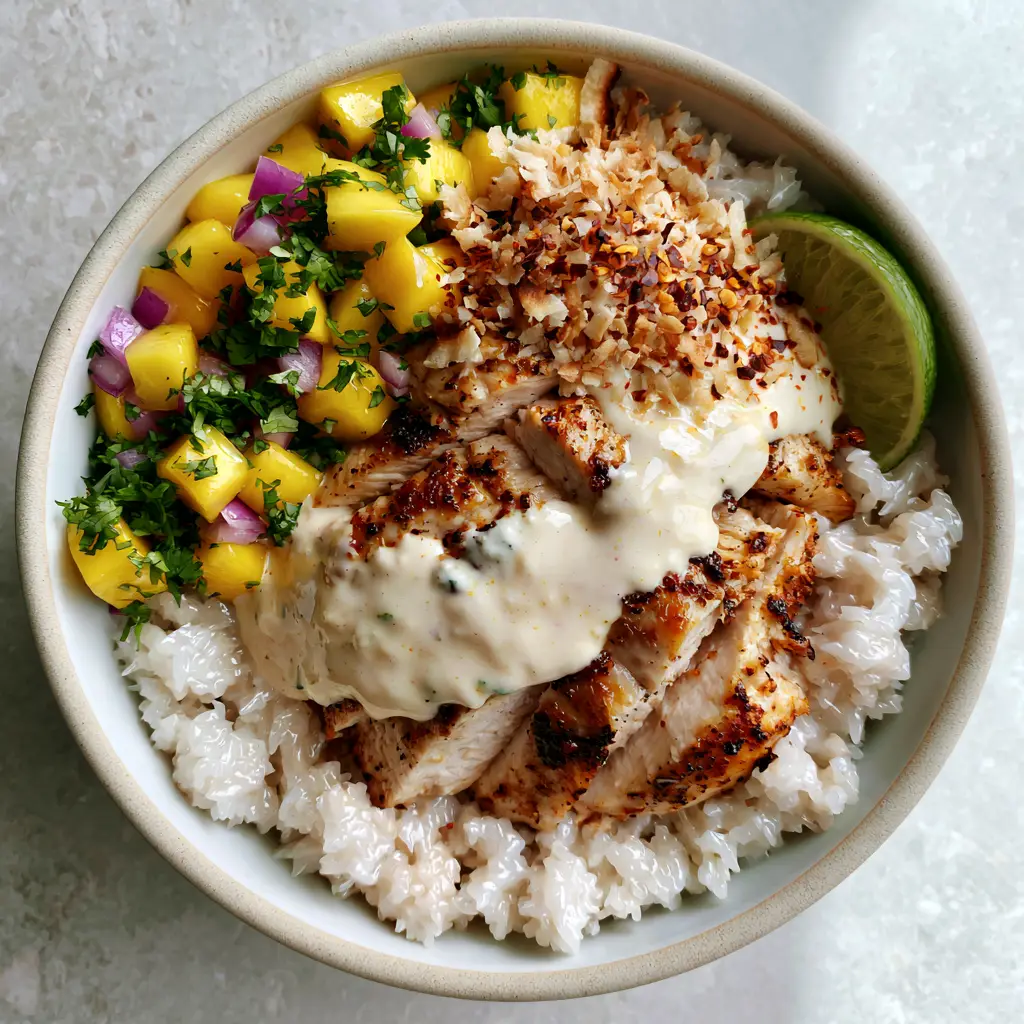
While the rice finishes, toss your diced mango, minced red onion, and half of the chopped cilantro in a small bowl. Add a squeeze of lime juice and a tiny pinch of salt. This salsa should look bright and colorful, with the purple of the onion popping against the yellow mango. If you enjoy this flavor profile, you might also love our Asian Chicken Crunch Salad which uses similar fresh aromatics.
Step 5: The Final Flourish and Plating
To assemble, place a generous base of coconut rice in a ceramic bowl. Arrange the succulent chicken slices on top. Drizzle the ivory reduction over the chicken, letting it pool slightly into the rice. Place a large spoonful of mango salsa beside the chicken. Garnish with toasted coconut flakes, the remaining cilantro, and a sprinkle of dried red chili flakes. Serve with a fresh lime wedge on the side for that final acidic touch.
Expert Tips for Success
- The Dry-Heat Rule: Never crowd the pan when searing the chicken. If the slices are too close, they will steam instead of sear, and you will lose those beautiful caramelized edges.
- Mango Ripeness: If your mango is too soft, it will turn into a mash. Look for a mango that gives slightly to pressure but still feels firm, like a ripe avocado.
- Coconut Milk Choice: Always use canned full-fat coconut milk for the sauce. Cartoned coconut milk used for drinking is too thin and will not reduce into a velvety cream.
- Internal Link Inspiration: If you find yourself craving more rice-based poultry dishes, check out our Bang Bang Chicken Crispy Rice Salad for a spicier, crunchier take on these ingredients.
Storage, Reheating, and Freezing Advice
The coconut chicken rice bowl is an excellent candidate for meal prep. Store the rice and chicken in an airtight container for up to 4 days in the refrigerator. However, keep the mango salsa and lime wedges in a separate container; the acid in the salsa will break down the mango over time, and you want to keep that fresh, vibrant texture for serving.
To reheat, add a teaspoon of water or coconut milk to the rice and chicken to prevent drying out. Microwave on medium power until steaming. Add the cold salsa and fresh garnishes only after the base is hot. We do not recommend freezing the mango salsa, but the cooked rice and chicken can be frozen for up to 2 months.
What to Serve With This Tropical Bowl
While this bowl is a complete meal on its own, you can expand the spread for a dinner party. A side of charred bok choy or a simple cucumber salad works wonders. If you are looking for other protein-packed salads to round out your weekly menu, consider our Mediterranean Grilled Chicken Salad for a different flavor profile, or our Chicken and Quinoa Salad for more ancient grain inspiration.
Frequently Asked Questions
Yes! Chicken thighs work beautifully and are more forgiving. They will take slightly longer to sear but will remain incredibly succulent with those same caramelized edges.
While you can use light coconut milk for the rice, we strongly recommend full-fat canned coconut milk for the sauce. Light versions contain more water and won’t achieve that rich, ivory velvety consistency.
The secret is rinsing the rice until the water runs completely clear to remove excess surface starch. Additionally, follow the 15-minute simmer and 5-minute rest rule without lifting the lid.
The heat level is mild. The dried red chili flakes provide a gentle warmth, but you can omit them entirely or swap for fresh jalapeños if you prefer more significant spice.
Ataulfo (Honey) mangoes or Kent mangoes are best because they are sweet, buttery, and lack the fibrous strings found in other varieties, making for a much better salsa texture.
The Ultimate Coconut Chicken Rice Bowl Recipe
This recipe is the perfect intersection of tropical brightness and savory comfort. By following the precise searing and reduction steps, you ensure a bowl that looks like professional photography but tastes like home-cooked soul food.
Coconut Chicken Rice Bowl with Tropical Mango Salsa and Creamy Coconut Sauce
Ingredients
Equipment
Method
- Rinse the jasmine rice until the water runs clear. In a pot, combine rice, 1 cup coconut milk, water, and a pinch of salt.
- Bring to a boil, then cover and simmer on low for 15 minutes. Let rest for 5 minutes, then fluff with a fork until glistening.
- Season chicken with salt and pepper. In a hot skillet with oil, sear chicken strips for 4-5 minutes per side until golden-brown edges appear.
- Remove chicken. Pour remaining coconut milk into the pan, scraping the bottom. Simmer until thickened into a velvety ivory sauce.
- Mix diced mango, red onion, and half the cilantro with a squeeze of lime.
- Layer rice, top with chicken and sauce. Add mango salsa, toasted coconut, chili flakes, and a lime wedge.
Notes
Use full-fat canned coconut milk for the richest sauce texture.
Share Your Tropical Creations!
We can’t wait to see how your coconut chicken rice bowl turns out! Did you get that perfect golden sear on the chicken? Tag us in your photos or leave a comment below with your favorite tropical additions. Don’t forget to save this recipe to your “Summer Dinner” boards on Pinterest so you always have a taste of the tropics at your fingertips.