There is something inherently hypnotic about the perfect Chicken Tsukune. When you see those plump, perfectly round meatballs glistening under a thick, mahogany-colored glaze, your palate immediately anticipates the balance of salty, sweet, and savory. This isn’t just a snack; it is a masterclass in Japanese street food textures, brought directly into your home kitchen using modern techniques.
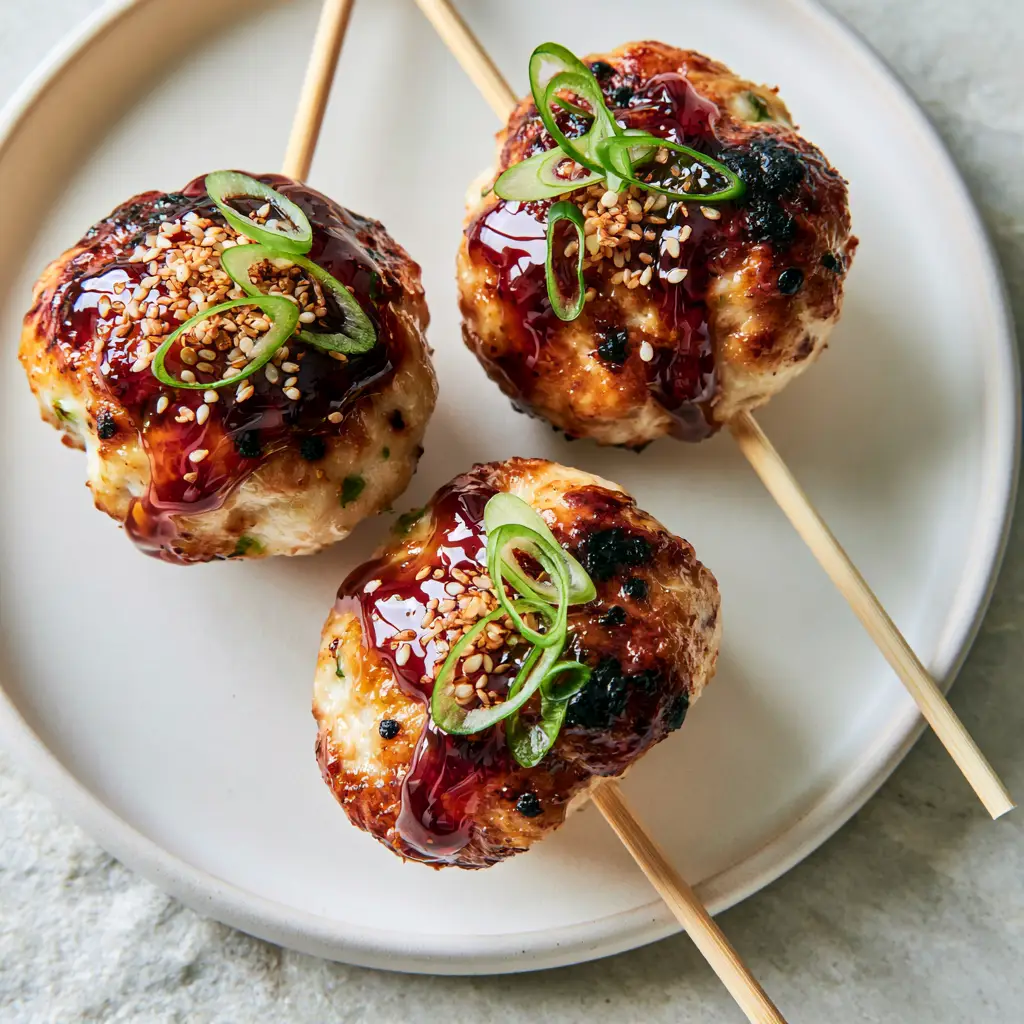
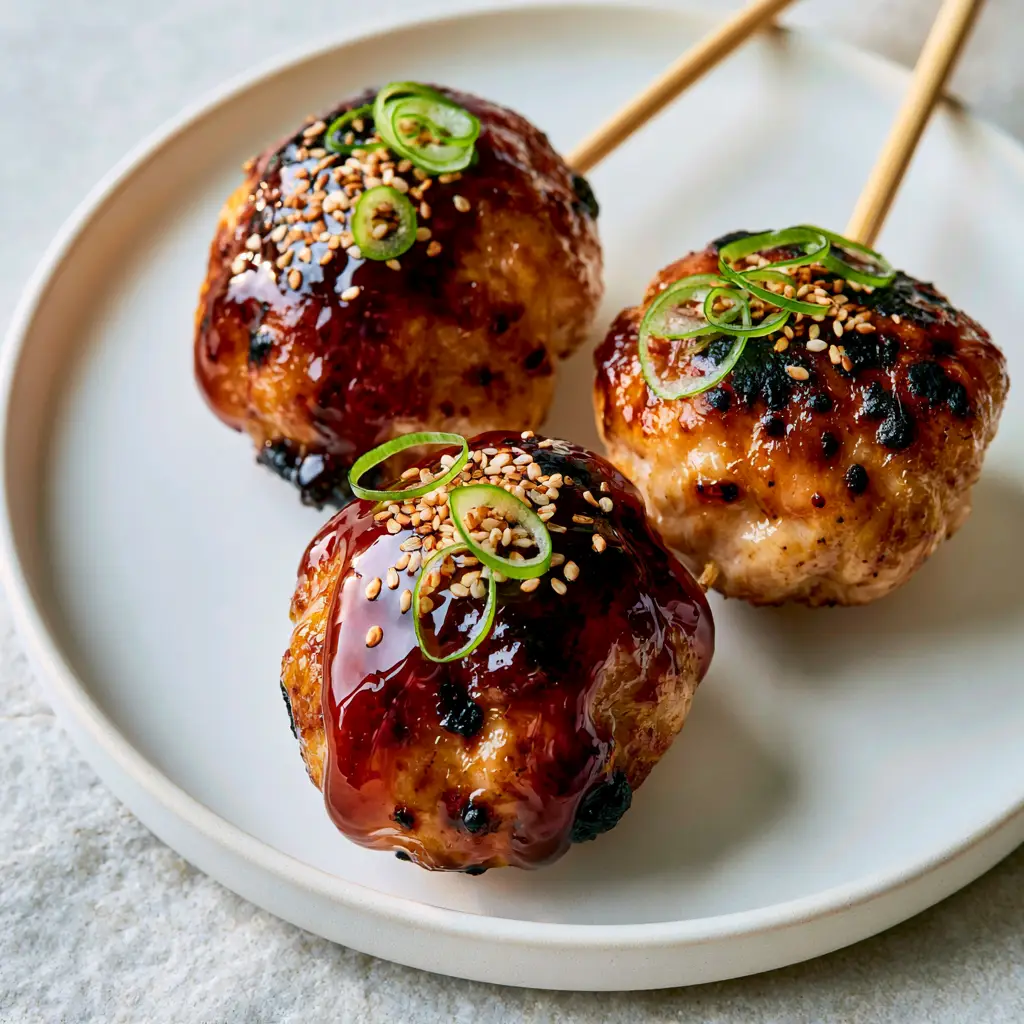
Our journey to the perfect skewer begins with understanding the “macro” appeal described in professional culinary photography. Imagine three pristine bamboo skewers resting on a minimalist off-white ceramic plate, each holding meatballs with golden-brown seared surfaces and tiny spots of dark charring. The reflective nature of the yakitori tare, contrasted against the bright green of paper-thin scallion rings, creates a visual feast that we are going to replicate exactly.
Whether you are a veteran of the charcoal grill or a home cook looking for a weeknight win, this air fryer method ensures succulent results without the fuss of an open flame. We are focusing on that “handheld smartphone photo” quality—authentic, unedited, and undeniably delicious. Let’s dive into the science of the perfect Japanese meatball.
The Anatomy of an Irresistible Japanese Meatball
- The Perfect Char: By utilizing the high-velocity heat of an air fryer, we achieve those specific spots of dark charring that mimic a traditional binchotan grill.
- The Mahogany Glaze: A thick, translucent tare that clings to the meat, providing a reflective, sticky finish that tastes as deep as it looks.
- Plump Texture: We use a specific blend of ground chicken and binders to ensure the meatballs remain round and juicy, never dry or shrunken.
- Sensory Garnish: The crunch of toasted white sesame seeds and the sharp, fresh bite of scallions provide the essential top-note to the rich meat.
Essential Components for Authentic Chicken Tsukune
Ground Chicken Thighs (450g / 1 lb): While you can use breast meat, chicken thighs provide the essential fat content required for a “plump” and juicy interior. It is the secret to meatballs that don’t crumble when skewered.
Panko Breadcrumbs (1/2 cup / 30g): These Japanese-style crumbs act as tiny sponges, locking in the natural juices of the chicken and maintaining the structural integrity of the sphere.
Fresh Grated Ginger (1 tbsp / 6g): Ginger provides a sharp, aromatic backbone that cuts through the sweetness of the glaze and brightens the savory chicken.
Low-Sodium Soy Sauce (1/4 cup / 60ml): This is the foundation of our mahogany tare, providing the deep amber color and the essential salty “umami” base.
Mirin (1/4 cup / 60ml): A Japanese sweet rice wine that gives the glaze its characteristic “reflective” shine and a subtle, mellow sweetness.
Toasted Sesame Oil (1 tsp / 5ml): Just a hint of this nutty oil inside the meat mixture creates a complex aroma that blooms as the meatballs sear.
Light Brown Sugar (2 tbsp / 25g): The molasses in brown sugar helps achieve that thick, syrupy consistency in the glaze that clings to the meatball surface.
Cornstarch Slurry (1 tsp cornstarch mixed with 1 tsp water): This is the “invisible” ingredient that ensures your glaze is translucent and thick enough to be “reflective” rather than runny.
Scallions and Sesame Seeds: These are not just garnishes; the paper-thin green rings and toasted seeds provide the final textural layer required for the visual blueprint.
Professional Tools for the Perfect Skewer
To achieve the look of a high-end yakitori-ya, you will need clean, light-colored bamboo skewers. It is vital to soak these in water for at least 30 minutes to prevent them from splintering or burning during the air frying process. You will also need a high-quality pastry brush—silicone or natural bristle—to layer the glaze effectively. Finally, an air fryer with a high-temperature setting (400°F / 200°C) is necessary to create that specific “charred” surface without overcooking the center.
Mastering the Prep: Mixing and Shaping
Developing the Meatball Base
In a large chilled mixing bowl, combine your ground chicken, panko, egg, ginger, and garlic. Use your hands to mix the ingredients until the mixture becomes slightly “tacky” or sticky; this protein development ensures the meatballs hold their round shape. If you enjoy diverse flavors, you might find this process similar to prepping the base for savory chicken salad, where texture is everything.
The Art of the Sphere
Lightly oil your hands to prevent sticking. Scoop approximately 2 tablespoons (30ml) of the mixture and roll it into a perfectly round, plump ball. You want each one to be uniform—about the size of a golf ball—to ensure even cooking and a professional appearance on the ceramic plate.
The Two-Stage Cooking Process
Step 1: The Initial Sear
Place the meatballs in the air fryer basket, ensuring they are not touching. Cook at 400°F (200°C) for 8 minutes. During this stage, you are looking for the surface to turn golden-brown. The high heat of the air fryer will create those tiny spots of dark charring mentioned in our visual prompt, giving the appearance of a handheld smartphone photo taken at a Japanese night market.
Step 2: The Glazing Ritual
While the meatballs cook, simmer your soy sauce, mirin, sake, and brown sugar in a small saucepan until reduced by half. Whisk in the cornstarch slurry to reach a thick, mahogany consistency. Once the meatballs are seared, remove them and thread three onto each bamboo skewer. Brush them generously with the glaze and return to the air fryer for 2 additional minutes. This caramelizes the sugars, creating that sticky, reflective finish.
Expert Tips for Success
- Chilled Meat: Always keep your ground chicken as cold as possible before shaping. This prevents the fat from melting prematurely, ensuring the “plump” texture we desire.
- The Double Dip: For the most reflective mahogany glaze, brush the meatballs twice. Once before the final 2 minutes of air frying, and a light “touch-up” coat just before serving.
- Uniform Slicing: Use a very sharp knife to cut your scallions into “paper-thin rings.” Thick chunks of onion will distract from the minimalist aesthetic of the off-white plate.
- Internal Temperature: Use an instant-read thermometer to ensure the chicken reaches 165°F (74°C). This guarantees they are safe to eat while remaining succulent.
Creative Pairings and Serving Suggestions
These Chicken Tsukune skewers are a fantastic centerpiece for a Japanese-inspired spread. For a light lunch, serve them alongside an Asian crunch chicken salad to provide a fresh, vinegar-based contrast to the sweet tare glaze. If you are preparing a larger dinner, they pair beautifully with a coconut chicken rice bowl, where the extra glaze can season the rice.
For those who love the format of skewered meats, you might also enjoy comparing these to traditional grilled chicken kabobs. While the flavor profiles differ, the joy of eating off a bamboo skewer remains a universal culinary delight.
Storage and Reheating Guidelines
Refrigeration: Store leftover glazed meatballs in an airtight container for up to 3 days. The glaze will thicken further in the fridge, becoming even stickier.
Reheating: To maintain the “reflective” look and seared texture, reheat in the air fryer at 350°F (175°C) for 3-4 minutes. Avoid the microwave, as it will make the panko-based meatball rubbery and dull the shine of the mahogany glaze.
Freezing: You can freeze the raw meatballs (unskewered) for up to 2 months. Thaw completely in the refrigerator before skewering and air frying according to the recipe instructions.
Frequently Asked Questions
You can, but the meatballs will be significantly drier. Chicken thighs provide the essential fat needed for that ‘plump’ and succulent texture shown in the photos.
Ensure you mix the ground chicken until it becomes ‘tacky.’ This develops the proteins that bind the meat. Also, chilling the shaped meatballs for 15 minutes before skewering helps them hold their form.
The combination of mirin and brown sugar creates the shine, while the long reduction of soy sauce provides the deep mahogany hue. A cornstarch slurry ensures it is thick enough to cling to the meat.
Use a very sharp chef’s knife or a mandoline to create paper-thin rings. Soaking the sliced scallions in ice water for 5 minutes makes them extra crisp and bright green.
The air fryer circulates high-heat air rapidly, which creates the specific small spots of dark charring and a golden-brown surface much faster and more consistently than a standard home grill.
The Perfect Chicken Tsukune Recipe
Chicken Tsukune: The Ultimate Air Fryer Japanese Meatball Skewers
Ingredients
Equipment
Method
- In a small saucepan, combine soy sauce, mirin, sake, and brown sugar. Bring to a simmer over medium heat and reduce by half until syrupy.
- Whisk in the cornstarch slurry and cook for 1 minute until the glaze is thick, translucent, and mahogany-colored. Set aside.
- Combine ground chicken, panko, egg, ginger, garlic, and sesame oil in a bowl. Mix by hand until the mixture is tacky.
- Roll into 12-15 perfectly round meatballs (about 2 tbsp each).
- Place in air fryer at 400°F (200°C) for 8 minutes until golden-brown with spots of dark charring.
- Thread three meatballs onto each soaked bamboo skewer. Brush generously with the mahogany tare glaze.
- Return skewers to the air fryer for 2 minutes to caramelize the glaze. Apply a final coat of glaze after removing.
Notes
For an extra shiny finish, apply the final layer of glaze immediately before serving on a minimalist plate.
Bring the Yakitori Experience Home
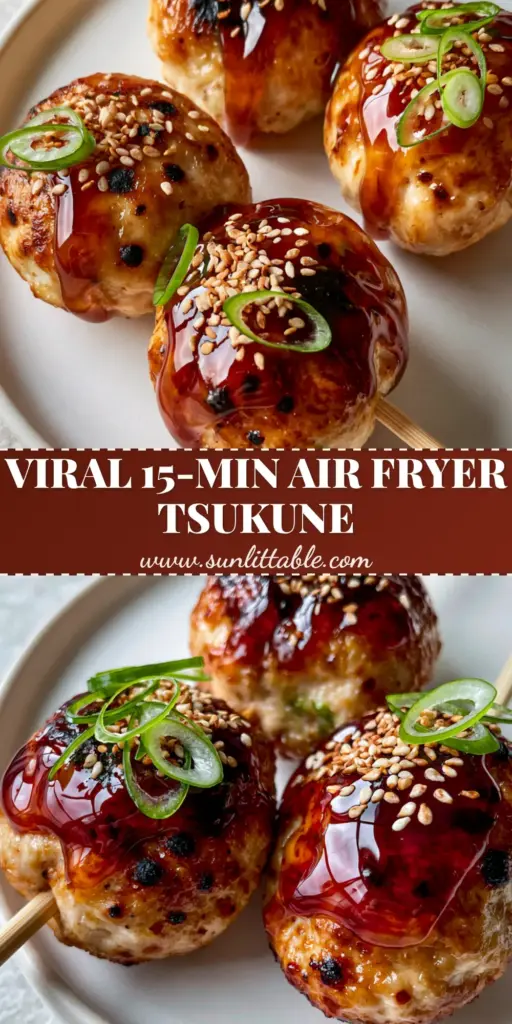
Mastering Chicken Tsukune is about more than just following a recipe; it is about respecting the visual and textural cues that make Japanese cuisine so iconic. From the dark spots of char to the mahogany glaze that captures the morning light, every element of this dish is designed to impress. We invite you to try this recipe and see how the air fryer can transform simple ground chicken into a gourmet experience.
If you enjoyed this recipe, please leave a comment below and share your results! Don’t forget to pin this recipe to your favorite boards on Pinterest so you can find it whenever the craving for authentic yakitori strikes.