The Rotisserie Chicken Salad is a cornerstone of the modern kitchen, but rarely does it achieve the level of culinary sophistication found in high-end bistros. This recipe transforms the humble store-bought bird into a masterpiece of texture, utilizing a thick, velvety Greek yogurt base and the often-overlooked secret ingredient: crisped chicken skin. When you look at the vibrant greens of the dill and chives against the golden-brown roasted bits, you realize this isn’t just lunch; it is a sensory experience designed for those who appreciate the finer details of home cooking.
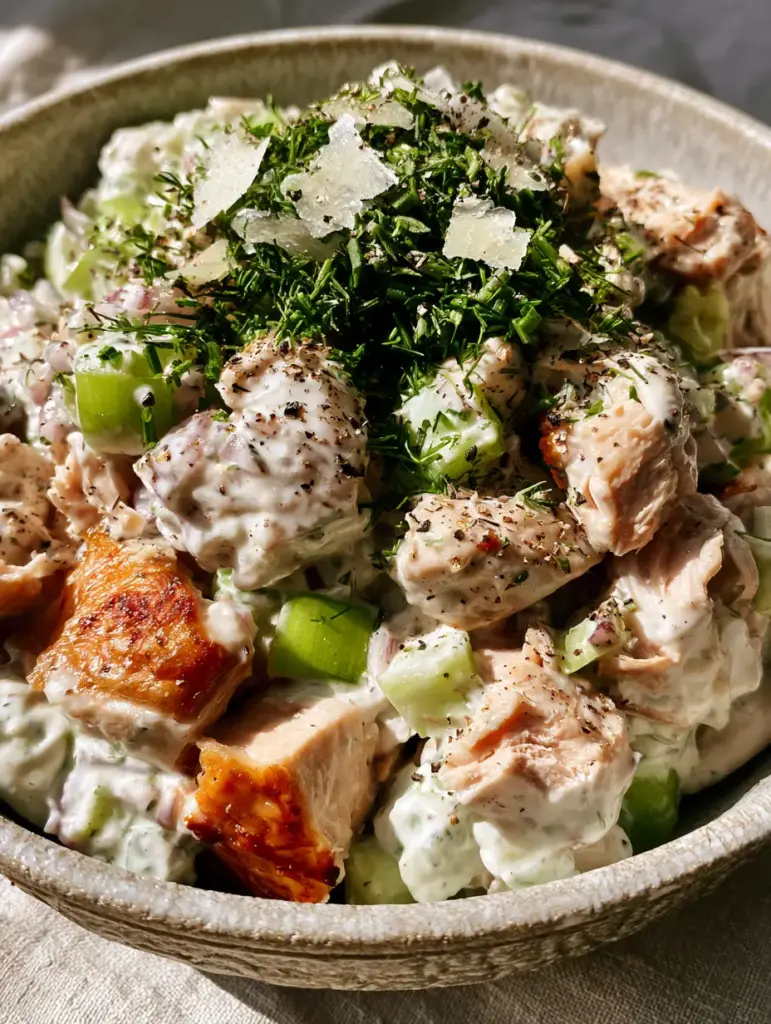
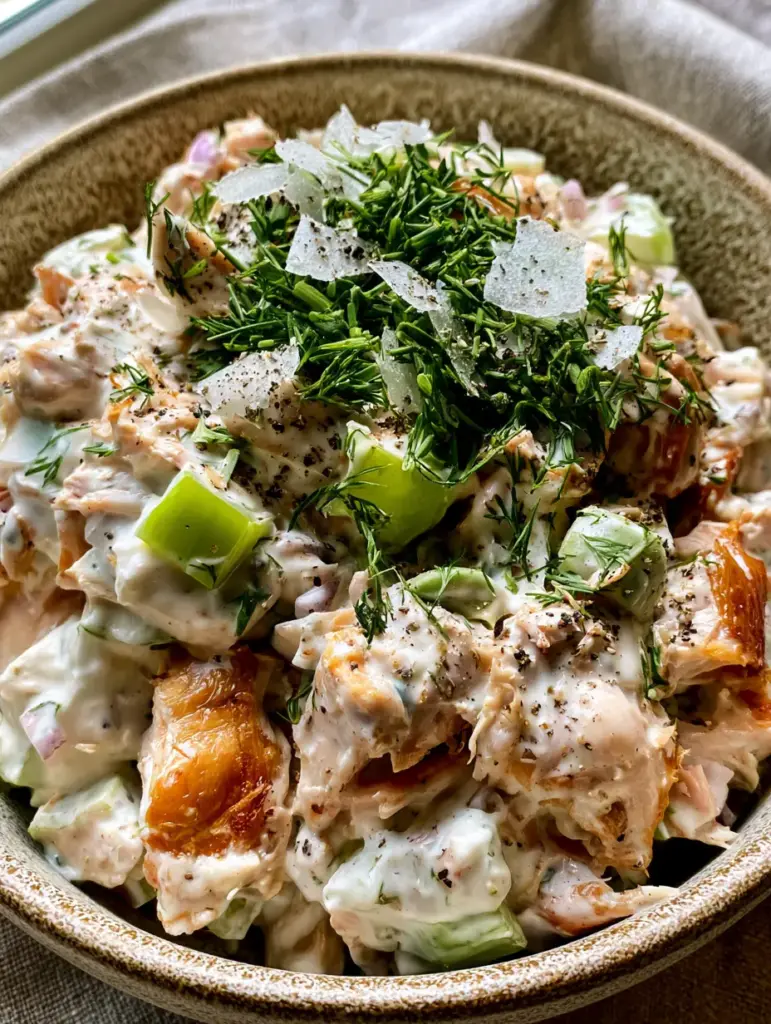
Imagine a macro-shot of your lunch: a textured ceramic bowl catching the soft morning light, filled with chunky shredded chicken that glistens under a coating of thick white sauce. You see the bright, crisp dice of celery and the fine flecks of red onion, all crowned with a generous heap of fresh herbs and large flakes of sea salt. This visual harmony is exactly what we are building today, ensuring every bite delivers a crunch, a creamy tang, and a burst of herbaceous freshness that lingers on the palate.
Why This Protein-Packed Lunch Beats Every Deli Alternative
- Structural Integrity: Unlike watery, mayo-heavy versions, our use of Greek yogurt provides a stable, velvety coating that doesn’t separate or become greasy.
- The “Skin” Factor: We maximize the rotisserie flavor by removing, crisping, and mincing the skin, adding a deep, umami-rich crunch to every spoonful.
- Herb-Forward Profile: The heavy inclusion of fresh dill and chives elevates the flavor from “savory” to “bright and garden-fresh.”
- Visual Contrast: The combination of bright green celery and deep red onion creates a vibrant aesthetic that looks as good as it tastes.
- Nutritional Density: By swapping traditional binders for Greek yogurt, we increase the protein count while reducing saturated fats, creating a truly healthy chicken salad alternative.
Foundational Ingredients for the Ultimate Creamy Texture
To achieve the specific visual and textural results described in our culinary blueprint, we must select ingredients that offer both moisture and structural support. The base of our Rotisserie Chicken Salad relies on the quality of the bird and the thickness of the dairy.
Shredded Rotisserie Chicken: You need approximately 1 lb (454g) of meat, preferably a mix of breast and thigh for the best moisture balance. The chicken should be shredded by hand into chunky, irregular pieces to better catch the thick dressing.
Roasted Chicken Skin: This is the visual and textural star; you will remove the skin from the whole bird and briefly crisp it. This adds the “golden-brown” visual cues and a concentrated roasted flavor that defines this specific dish.
Thick Greek Yogurt: Use 1 cup (245g) of full-fat, plain Greek yogurt to ensure the dressing is “velvety and white.” Full-fat yogurt has a lower water content, preventing the salad from becoming soggy after an hour in the fridge.
Diced Green Celery: 1/2 cup (50g) of finely diced celery provides the “bright green” pops of color and the essential structural crunch. Focus on using the inner ribs of the celery heart for the most tender yet crisp texture.
Minced Red Onion: 1/4 cup (40g) of finely minced onion adds a sharp, acidic bite that cuts through the richness of the yogurt. Mincing them finely ensures they distribute evenly without overpowering the delicate herbs.
Fresh Herbs (Dill & Chives): You will need 1/4 cup (10g) of each, freshly chopped. The dill provides a feathery texture and earthy sweetness, while the chives offer a mild, onion-like bite and vibrant green color.
Invisible Foundations (Lemon & Dijon): 1 tbsp (15ml) of fresh lemon juice and 1 tsp (5g) of Dijon mustard are required to emulsify the yogurt and add necessary acidity. These won’t be seen, but they are scientifically required to balance the fats.
Seasoning: Large flaky sea salt and coarse cracked black pepper are essential for the final garnish. They provide the “macro” visual appeal and specific pops of seasoning that round out the dish.
The Toolkit: Everything You Need for a Professional Mise en Place
Achieving a professional-grade Rotisserie Chicken Salad requires the right tools to handle the textures correctly. You will need a large, textured ceramic bowl for mixing and serving, as the ceramic retains a cool temperature which keeps the yogurt dressing stable.
A sharp chef’s knife is non-negotiable for the “finely minced” red onion and “finely chopped” herbs; dull blades will bruise the dill, turning it black rather than keeping it bright green. You will also need a small non-stick skillet to crisp the chicken skin bits, ensuring they reach that perfect golden-brown hue without burning.
Perfect Shreds and Crispy Skin: The Preparation Phase
Handling the Rotisserie Bird
Begin with a warm rotisserie chicken, as it is significantly easier to shred than a cold one. Remove the skin in large sheets and set them aside; this skin is the key to our visual blueprint. Use two forks or your hands to pull the meat into chunky shreds, ensuring you have a mix of light and dark meat for optimal flavor.
If you prefer to cook your chicken from scratch for a different flavor profile, you might consider a slow cooker rotisserie chicken method. However, for this recipe, the store-bought variety provides that specific salty, roasted exterior we need for the skin bits.
The Secret Crispy Skin Technique
Take the reserved skin and place it in a cold non-stick skillet over medium-low heat. As the fat renders out, the skin will begin to bubble and turn a deep golden-brown. Once it is shatter-crisp, remove it to a paper towel, let it cool, and then finely chop it into small “bits.” This adds the “visible roasted skin” mentioned in the visual prompt.
Crafting the Velvety Greek Yogurt Dressing
In a separate small bowl, whisk together the Greek yogurt, lemon juice, and Dijon mustard. This creates the “thick, velvety white sauce” that coats the chicken without masking the other ingredients. The acidity in the lemon juice is vital as it tenderizes the shredded chicken fibers slightly, allowing them to absorb the flavors more deeply.
Season the dressing base with a pinch of the cracked black pepper and just a touch of sea salt. Remember that rotisserie chicken is already seasoned, so we want the dressing to be a cooling, tangy counterpoint rather than an additional salt bomb. This is a similar technique used in a tangy dill pickle salad where the balance of acid and dairy is paramount.
Folding and Garnishing for Maximum Visual Impact
The Assembly
Combine the shredded chicken, diced celery, minced red onion, and half of the chopped herbs in your ceramic bowl. Pour the velvety dressing over the top and use a wide spatula to fold the ingredients together. You want to “coat every piece,” but avoid over-mixing, which can turn the celery dull and the chicken mushy.
The Final Garnish
This is where we match the Midjourney visual prompt exactly. Top the salad with the remaining fresh dill and chives, creating a “generous heap” of green. Sprinkle the crispy chicken skin bits across the top for that golden-brown contrast. Finally, finish with a bold dusting of coarse cracked black pepper and large flakes of sea salt, which should be clearly visible on the surface.
Pro-Level Tips for the Most Flavorful Results
- Cold-Soak Your Onions: If you find red onions too pungent, soak the minced pieces in ice water for 10 minutes, then pat dry. This maintains the “bright red” visual but removes the sulfurous bite.
- The “Rest” Period: Let the salad sit in the refrigerator for 20 minutes before serving. This allows the Greek yogurt to set and the flavors of the dill and chives to permeate the meat.
- Herb Preservation: Only chop your dill and chives immediately before adding them to the bowl to ensure they remain “fresh and bright green” as per the visual description.
- Texture Control: If the dressing feels too thick, add a teaspoon of water or additional lemon juice. It should be “thick and velvety,” not a paste.
Preserving Freshness: Storage and Meal Prep Guidelines
The Rotisserie Chicken Salad is best enjoyed within 24 hours of preparation to maintain the crunch of the celery and the crispness of the skin bits. Store it in an airtight glass container in the refrigerator. If you are meal prepping, keep the crispy skin bits in a separate small container at room temperature and add them just before eating to prevent them from becoming chewy.
We do not recommend freezing this salad. The cellular structure of the Greek yogurt and the celery will break down upon thawing, resulting in a watery, unappealing texture that loses all the “velvety” qualities we worked to achieve.
Perfect Pairings to Complete Your Meal
This salad is incredibly versatile and can be served on a bed of butter lettuce, inside a hollowed-out tomato, or with toasted sourdough. If you are looking for a variety of lunch options, you might explore our wider collection of creative chicken salads for more inspiration.
For a Mediterranean-inspired spread, serve this alongside marinated chicken skewers and some warm pita bread. The cool yogurt dressing in the salad acts as a perfect foil to grilled, charred meats.
Curiosity Solved: Your Top Questions Answered
Absolutely! While our blueprint focuses on celery and herbs, the creamy Greek yogurt base pairs beautifully with the sweetness of halved grapes or diced Granny Smith apples for extra crunch.
Yes, you can substitute mayonnaise, but you will lose the tangy profile and protein boost provided by the Greek yogurt. If using mayo, reduce the lemon juice slightly to maintain the correct consistency.
To keep celery crisp, ensure it is diced immediately before assembly and avoid freezing the salad. The Greek yogurt dressing also acts as a barrier, but the salad is best eaten within 24 hours.
When stored in an airtight container, this salad remains fresh and delicious for up to 3 days, though the crispy skin bits will lose their crunch after the first day.
While optional, crisping the skin in a skillet is what provides the unique ‘golden-brown’ crunch and deep roasted flavor described in this specific recipe. Without this step, the skin can become chewy when mixed with the dressing.
The Ultimate Recipe for Gourmet Rotisserie Chicken Salad
This recipe provides the exact blueprint for a lunch that is as visually stunning as it is delicious. By focusing on the texture of the chicken, the snap of the vegetables, and the aromatic power of fresh herbs, you elevate the standard Rotisserie Chicken Salad into something worthy of a macro-photograph. Enjoy the balance of the creamy Greek yogurt and the unmistakable crunch of the crisped chicken skin.
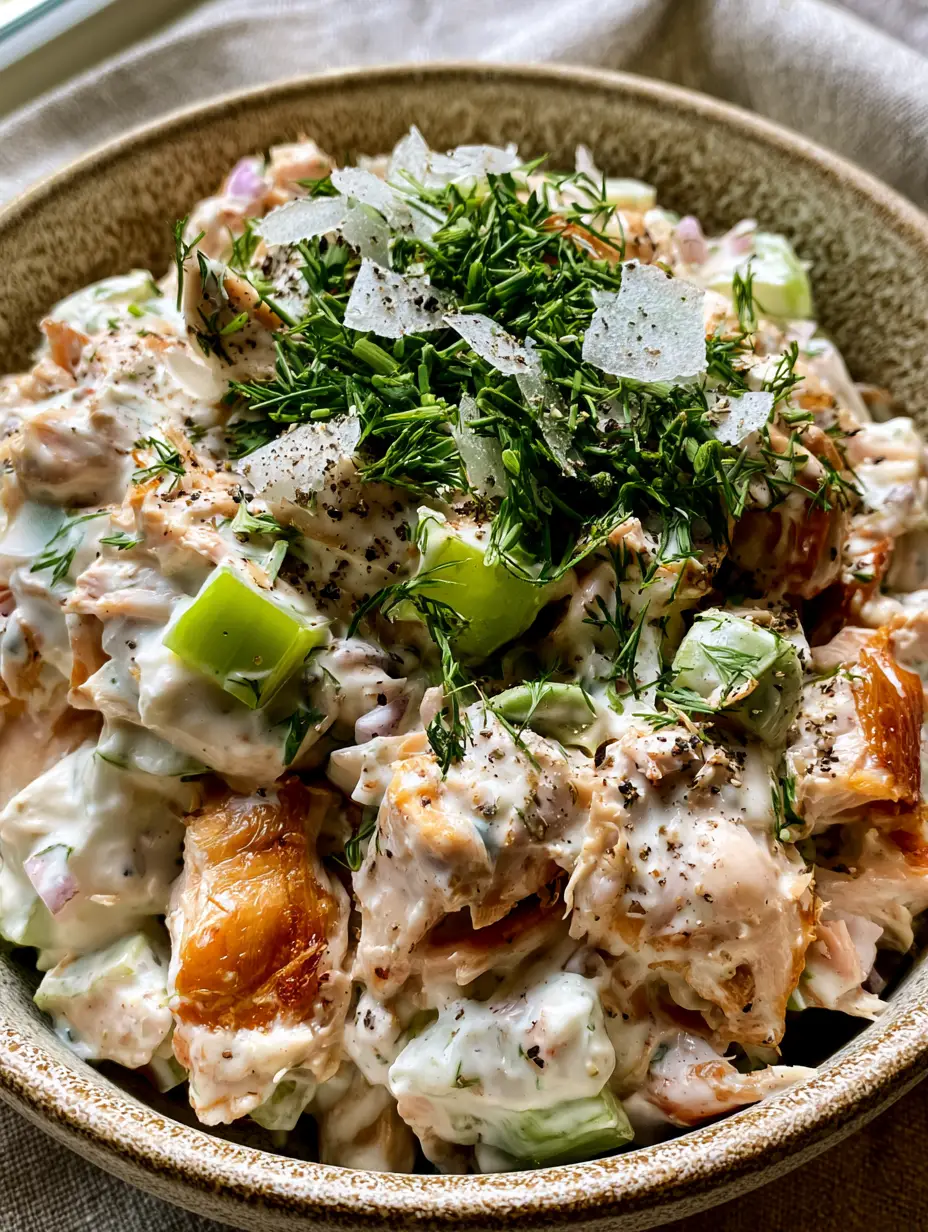
Rotisserie Chicken Salad with Creamy Greek Yogurt and Crispy Skin
Ingredients
Equipment
Method
- Shred the warm rotisserie chicken into chunky pieces using two forks, ensuring the skin is set aside.
- Place the reserved skin in a skillet over medium-low heat. Fry until golden-brown and crisp. Remove, cool, and finely mince into bits.
- In a bowl, combine Greek yogurt, lemon juice, and Dijon mustard until velvety and smooth.
- Fold the shredded chicken, celery, red onion, and half of the herbs into the dressing until coated.
- Top with remaining dill, chives, crispy skin bits, flaky sea salt, and cracked black pepper.
Notes
Crisp the skin just before serving to maintain maximum crunch.
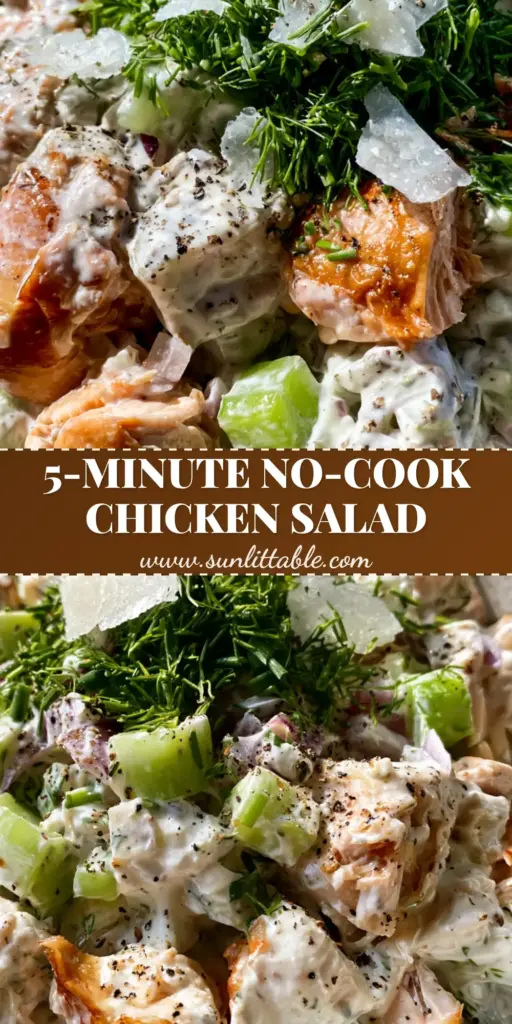
Closing & Call to Action
Mastering the Rotisserie Chicken Salad is about respecting the ingredients and understanding the science of texture. Whether you’re serving this for a bright morning brunch or a quick weekday lunch, the combination of fresh herbs and roasted skin never fails to impress. If you enjoyed this recipe, please leave a comment below and share your results! For more visually inspired recipes, follow us on Pinterest and save this to your favorite recipe boards.