Gochujang Chicken is the recipe your weeknight dinner routine has been begging for. Imagine bite-sized pieces of succulent chicken, seared to a perfect golden-brown crunch, and then tossed in a thick, translucent, vibrant ruby-red glaze that hits every single taste bud. This dish perfectly balances the fermented heat of Korean chili paste with a delicate sweetness that creates tiny, caramelized sugar bubbles as it hits the hot pan.
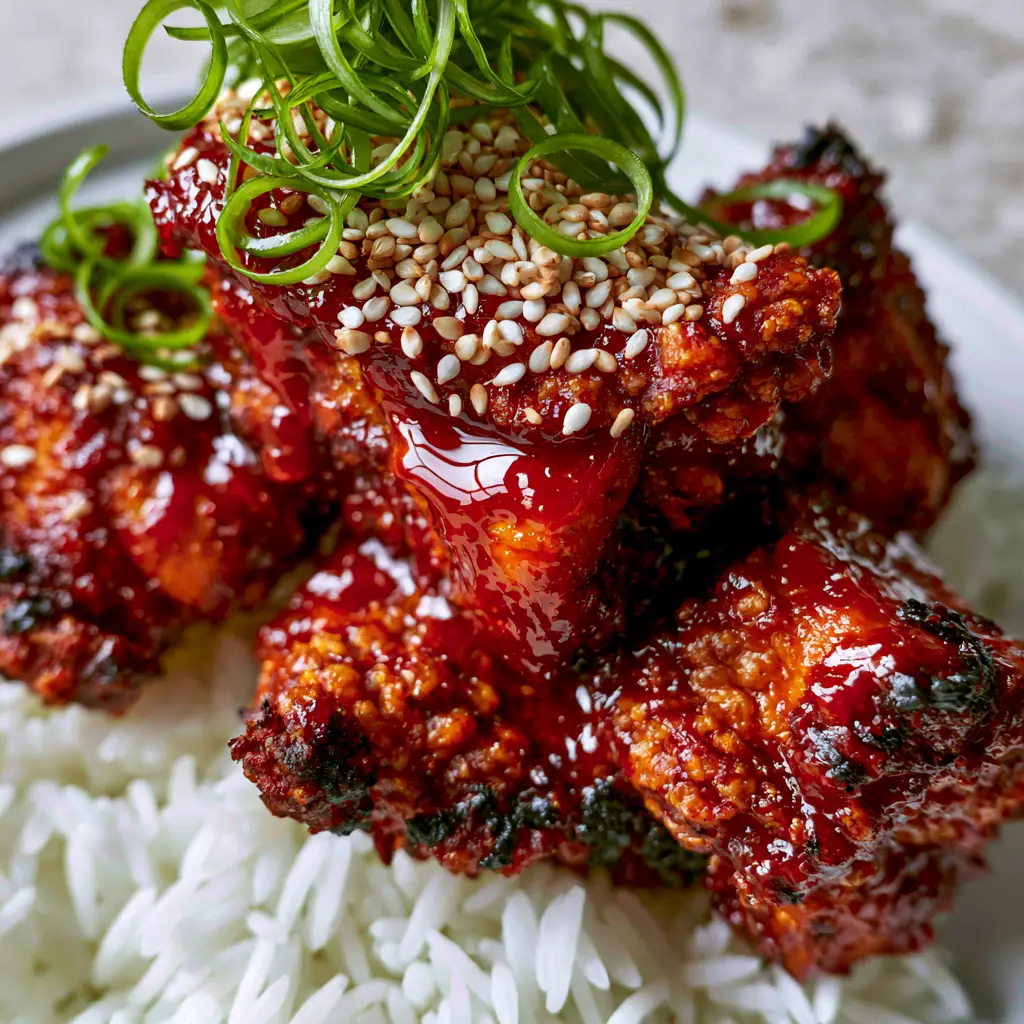
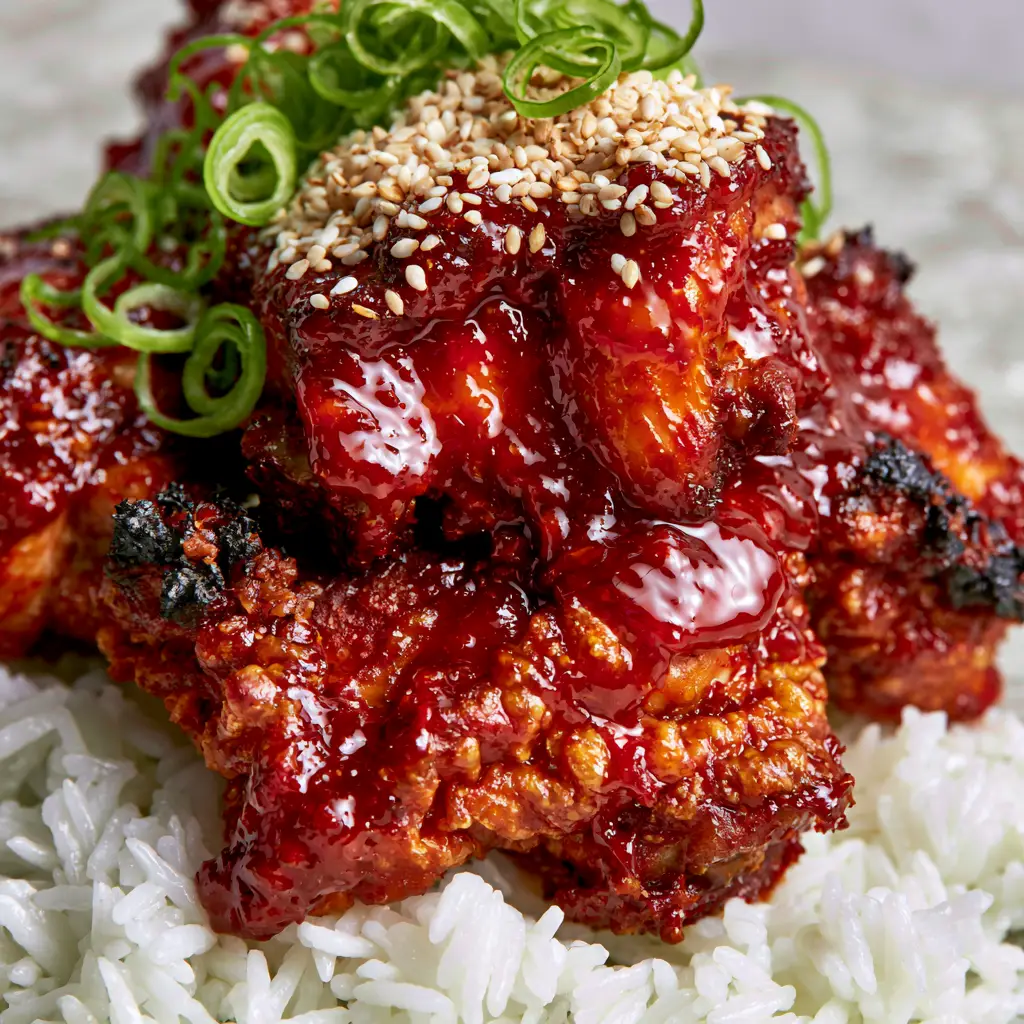
If you are a fan of bold flavors, this Gochujang Chicken will quickly become a household favorite. The texture is the star here—the chicken shows visible charred, caramelized edges and a textured, crunchy exterior that holds up beautifully under the glossy sauce. Served over a clean bed of fluffy, individual grains of steamed white jasmine rice, it is a visual and culinary masterpiece that looks like it stepped right out of a professional food photographer’s studio.
Why This Gochujang Chicken Is Better Than Takeout
- Extreme Texture Contrast: We use a specific searing technique to ensure the chicken thighs stay crispy even after being coated in the sticky sauce.
- The Perfect Ruby-Red Glaze: The sauce is thick, translucent, and glossy, pooling slightly in the crevices of the meat for maximum flavor delivery.
- Balanced Heat: Unlike some versions that are overwhelmingly spicy, this recipe balances the Gochujang Chicken heat with honey and aromatics.
- Visually Stunning: With bright green scallion curls and toasted white sesame seeds, this dish is a Pinterest-viral dream.
If you enjoy this style of crispy, flavor-forward poultry, you might also love our Chinese honey garlic chicken or even a fun twist like homemade popcorn chicken. Both offer that signature crunch that makes Gochujang Chicken so addictive.
Essential Ingredients for the Perfect Korean Glaze
To achieve the signature look and taste of authentic Gochujang Chicken, you need the right components. Every ingredient serves a specific culinary purpose to build layers of flavor.
- Chicken Thighs (1.5 lbs / 680g): Thighs are essential for this recipe. They remain juicy under high heat and provide the fat necessary for those charred, caramelized edges.
- Gochujang Paste (3 tbsp / 45ml): The heart of the dish. This fermented Korean chili paste provides a deep, savory umami and a vibrant ruby-red color.
- Honey (2 tbsp / 30ml): This creates the “translucent” quality of the sauce and allows for the formation of caramelized sugar bubbles.
- Soy Sauce (1 tbsp / 15ml): Adds the necessary salt and depth to the Gochujang Chicken base.
- Rice Vinegar (1 tbsp / 15ml): A touch of acidity to cut through the richness of the chicken and the heat of the chili.
- Fresh Ginger & Garlic: These aromatics provide the “zing” that elevates the dish from good to restaurant-quality.
- Cornstarch (2 tbsp / 30g): Used to coat the chicken before searing, ensuring a crunchy, textured exterior.
- Jasmine Rice: The perfect neutral, fluffy base to soak up the extra glossy glaze.
The Science of the Perfect Sear
Creating world-class Gochujang Chicken requires understanding the Maillard reaction. You aren’t just cooking the meat; you are developing flavor through high-heat browning. When the chicken hits the oil, the exterior should immediately begin to crisp. This creates a barrier that keeps the juices inside while providing the “crunch” that Pinterest users crave.
Similar to how we prepare our chicken with garlic sauce, the heat must be consistent. Use a heavy-bottomed skillet or a cast-iron pan to maintain a steady temperature. This ensures that the Gochujang Chicken doesn’t steam in its own juices, but rather fries into golden perfection.
Step-by-Step Instructions for Gochujang Chicken
Preparing the Crispy Chicken Foundation
Start by patting your chicken thighs completely dry with paper towels. Moisture is the enemy of a good sear. Cut the chicken into uniform 1-inch (2.5cm) bite-sized chunks. In a large bowl, toss the chicken with salt, pepper, and cornstarch until every piece has a thin, even coating. This cornstarch layer is what creates that textured, crunchy exterior.
Whisking the Ruby-Red Glaze
In a small glass bowl, combine the gochujang, honey, soy sauce, rice vinegar, and a splash of sesame oil. Whisk until the mixture is smooth and completely integrated. You are looking for a vibrant, translucent quality. If the paste is too thick, add a teaspoon of water at a time until it reaches a pourable, glossy consistency.
Achieving the Charred, Caramelized Edges
Heat 2 tablespoons (30ml) of neutral oil in your skillet over medium-high heat. Add the chicken in a single layer, ensuring you don’t overcrowd the pan. Let the chicken sit undisturbed for 3-4 minutes. You want to see visible charred, caramelized edges before flipping. Continue cooking for another 3-4 minutes until the chicken is cooked through and the exterior is golden and crisp.
The Final Glaze and Bubble Phase
Turn the heat down to medium and pour the gochujang mixture over the chicken. As the sauce hits the hot pan, you will see caramelized sugar bubbles forming. Toss the chicken quickly to coat every piece. The glaze should become thick and reflective, pooling slightly in the crevices of the meat. This only takes about 60-90 seconds—do not overcook the sauce or it will lose its translucency.
Expert Tips for Pinterest-Perfect Results
- The Scallion Curl Trick: To get those professional-looking “bright green scallion curls,” slice the green tops of the onions very thinly on a sharp bias and immediately drop them into a bowl of ice water for 5 minutes. They will curl into beautiful spirals.
- Toasting the Seeds: Don’t use raw sesame seeds. Toast your white sesame seeds in a dry pan for 2 minutes until they smell nutty. This adds a layer of flavor that defines great Gochujang Chicken.
- Rice Texture: Rinse your jasmine rice at least three times until the water runs clear. This ensures individual grains that stay fluffy and don’t clump together under the sauce.
- Heat Control: If the sauce starts to look dark or muddy, your heat is too high. You want to maintain that vibrant ruby-red color.
If you love the technique of searing chicken before adding a bold sauce, you should also check out our guide on how to perfectly bake chicken breasts for a healthier alternative, though it won’t have the same fried crunch as this Gochujang Chicken.
What to Serve With This Dish
While a bed of steamed jasmine rice is the classic choice, you can also serve Gochujang Chicken inside lettuce wraps for a lower-carb option. The crunch of fresh butter lettuce pairs beautifully with the sticky chicken. For a full Korean-inspired spread, serve with a side of spicy kimchi and a quick cucumber salad tossed in rice vinegar and sugar.
For those who love fusion, these chicken bites are incredible when tucked into teriyaki chicken tacos or even used as a protein boost in chicken carbonara for a wild “East meets West” flavor profile.
Storage and Reheating Instructions
To Store: Keep leftover Gochujang Chicken in an airtight container in the refrigerator for up to 3 days. The sauce will thicken further as it cools.
To Reheat: For the best results, avoid the microwave. Reheat the chicken in a skillet over medium heat with a tiny splash of water to loosen the glaze. This helps restore the glossy, translucent look of the sauce and keeps the chicken from becoming rubbery.
Freezing: You can freeze the cooked chicken for up to 2 months. However, the cornstarch coating will lose its crispness upon thawing.
Frequently Asked Questions
Yes, but be careful not to overcook them. Thighs are preferred because their higher fat content helps achieve those signature charred, caramelized edges.
The secret is the honey and not over-reducing the sauce. Once it starts to bubble and coat the chicken, remove it from the heat immediately.
Gochujang has a kick, but this recipe balances the heat with honey and rice vinegar, resulting in a manageable, medium-spicy glaze that most enjoy.
There is no perfect substitute for the fermented depth of Gochujang, but a mix of Sriracha and miso paste can work in a pinch.
The Ultimate Gochujang Chicken Recipe Card
Gochujang Chicken: The Ultimate Crispy and Sticky Korean Glazed Chicken
Ingredients
Equipment
Method
- Pat chicken dry and toss with cornstarch and salt until evenly coated.
- Whisk gochujang, honey, soy sauce, vinegar, ginger, and garlic in a small bowl until translucent and smooth.
- Heat oil in a skillet over medium-high heat. Add chicken in a single layer and cook for 3-4 minutes per side until charred and crispy.
- Lower heat to medium, add the sauce, and toss for 1-2 minutes until thick, bubbly, and glossy.
- Plate over steamed jasmine rice and garnish with sesame seeds and scallion curls.
Notes
Use ice water to curl your scallions for a professional look.
Join the Sunlit Table Community!
Did you make this Gochujang Chicken? We want to see your results! This dish is a favorite on Pinterest for a reason—it’s as beautiful as it is delicious. Please save this recipe to your Pinterest boards so you never lose it. Follow sunlit_table for more high-flavor, highly visual recipes every week.
If you tried it, leave a 5-star rating in the recipe card above and drop a photo in the comments below. Nothing makes us happier than seeing your charred, caramelized chicken masterpieces! Happy cooking!