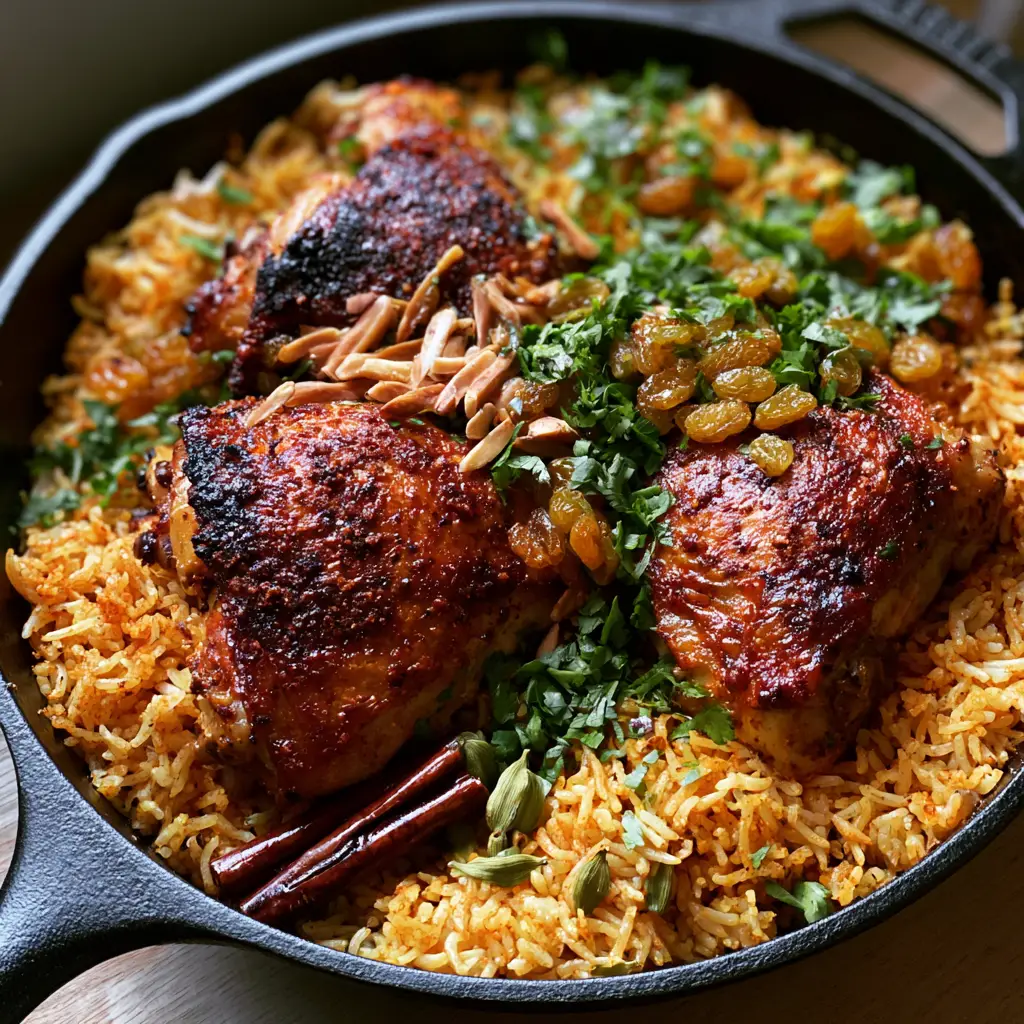
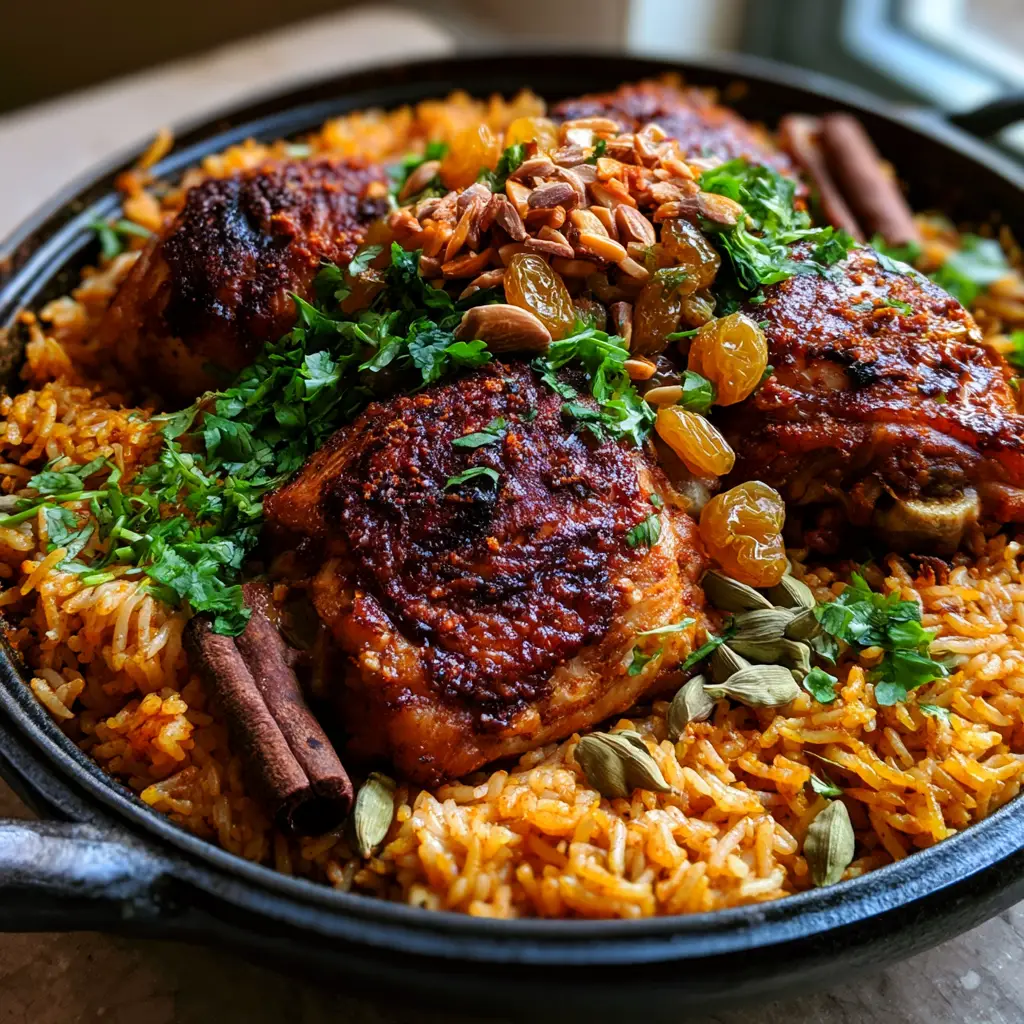
The first time you lift the heavy lid of a rustic cast iron pot filled with freshly cooked Arabic Chicken Kabsa, a cloud of aromatic steam rises to greet you. It is a moment of pure culinary theater. Each long grain of basmati rice is distinct, tinted a vibrant golden-orange from a delicate infusion of saffron and a warm blend of traditional spices. Perched atop this fragrant bed are bone-in chicken thighs, their skin glistening with natural juices and showing off the deep, dark char marks of a perfect sear.
Arabic Chicken Kabsa is not just a meal; it is an experience of hospitality and heritage. The visual contrast between the bright green chopped cilantro, the toasted crunch of slivered almonds, and the plump sweetness of golden raisins creates a masterpiece that looks as good as it tastes. Whether you are a seasoned home cook or new to Middle Eastern flavors, this guide will show you how to replicate that handheld smartphone photo-worthy finish in your own kitchen.
The Sensory Magic of This Authentic One-Pot Spiced Feast
- Visual Masterpiece: The deep golden-orange rice provides a stunning canvas for the glistening, charred chicken and vibrant green garnishes.
- Aromatic Depth: Whole cinnamon sticks and green cardamom pods release essential oils that perfume the entire house as the dish simmers.
- Texture Contrast: You get the fluffiness of individual rice grains, the snap of toasted almonds, and the succulent, tender pull of bone-in chicken.
- Balanced Flavor Profile: A sophisticated dance between savory spice rub, sweet raisins, and the citrusy lift of fresh cilantro.
Essential Elements for the Perfect One-Pot Spiced Feast
Bone-In, Skin-On Chicken Thighs: We use three large thighs to ensure maximum juiciness and flavor. The skin is vital for achieving that glistening charred texture described in the visual blueprint.
Long-Grain Basmati Rice: This specific rice is chosen for its ability to stay separate and fluffy. You will need 2 cups (400g) of high-quality aged basmati to achieve the distinct grain look.
Saffron Threads: A generous pinch (about 0.5g) of saffron is crushed and soaked to provide the signature deep golden-orange tint to every grain of rice.
Kabsa Spice Rub (Baharat): This invisible foundation includes cumin, coriander, and black pepper. It creates the spice rub texture visible on the seared chicken skin.
Whole Spices: Two whole cinnamon sticks and 6-8 green cardamom pods are nestled directly into the rice. These provide visual authenticity and a slow-release aromatic backbone.
Ghee or Vegetable Oil: 3 tbsp (45ml) of fat with a high smoke point is required. This is the “invisible” ingredient that allows us to achieve those deep char marks without burning the meat.
Aromatic Base: One large yellow onion (finely diced) and 3 cloves of garlic (minced) provide the savory foundation. They melt into the rice during the long simmer.
Tomato Paste: 2 tbsp (30g) of concentrated tomato paste helps deepen the color of the rice to that rich orange hue seen in the rustic pot.
Toasted Slivered Almonds: 1/4 cup (35g) of almonds provides the essential crunch. These must be lightly sautéed until golden brown before serving.
Golden Raisins: 1/4 cup (40g) of plump raisins adds a burst of sweetness. We soak them briefly so they become “plump” as specified in the blueprint.
Fresh Cilantro: One small bunch, finely chopped, provides the bright green scatter that finishes the dish. It offers a necessary cooling element to the warm spices.
Tools for Achieving Professional Searing and Fluffy Grains
To recreate the authentic look of the Arabic Chicken Kabsa, a Black Cast Iron Pot or Dutch Oven is non-negotiable. The thick walls of the cast iron distribute heat evenly, which is critical for searing the chicken thighs to a glistening brown and ensuring the rice doesn’t scorch on the bottom. The heavy lid also traps the steam, which is what creates those beautiful steam wisps when you finally open it for the photo.
You will also need a fine-mesh strainer for rinsing the rice. Rinsing removes excess starch, which is the secret to ensuring “each grain is distinct.” A small mortar and pestle is helpful for grinding the saffron threads to unlock their full color potential, turning your rice from pale yellow to a deep golden-orange.
Step-by-Step Instructions to Master the Kabsa Technique
Achieving the Perfect Glistening Sear
Pat the chicken thighs completely dry with paper towels; moisture is the enemy of a good sear. Rub the skin generously with the spice blend, ensuring the texture of the rub is visible. Heat 2 tbsp (30ml) of ghee in your cast iron pot over medium-high heat until it shimmers. Place the chicken skin-side down and do not move them for 5-6 minutes. You are looking for a deep brown, glistening skin with light char marks. Flip and sear the other side for 3 minutes, then remove the chicken and set it aside.
Building the Aromatic Foundation
In the same pot, add the remaining ghee and sauté the onions until they are translucent and picking up the brown bits from the chicken. Add the garlic, tomato paste, whole cinnamon sticks, and cardamom pods. Stir constantly for 2 minutes. The smell should be intoxicating as the whole spices bloom in the fat. This is where the “invisible” flavor layers of the Arabic Chicken Kabsa are built.
Simmering for Tenderness
Return the chicken to the pot and add 3.5 cups (830ml) of chicken stock. Bring to a boil, then reduce the heat to low, cover, and simmer for 20-25 minutes. This step ensures the bone-in thighs are cooked through and succulent. While the chicken simmers, prepare your saffron water by steeping the crushed threads in 2 tbsp (30ml) of warm water.
The Art of Steaming the Rice
Remove the chicken once more and set it on a plate. Add the rinsed basmati rice and the saffron water to the pot. The liquid should be a deep orange. Stir once, place the chicken back on top of the rice, and cover tightly. Cook on low heat for 15-18 minutes. Turn off the heat and let it sit, undisturbed, for another 10 minutes. This “resting” period is what creates the steam wisps and ensures the rice grains don’t break when you fluff them.
The Final Garnish and Presentation
While the rice rests, sauté your slivered almonds in a tiny bit of butter until they are golden and fragrant. Toss in the raisins for the last 30 seconds so they puff up. When ready to serve, fluff the rice gently with a fork, ensuring the cinnamon sticks and cardamom pods are visible on top. Scatter the almonds, raisins, and a generous amount of chopped fresh cilantro over the dish. The result should look exactly like a handheld smartphone photo of a rustic feast.
Master Techniques for Restaurant-Quality Results
- Rinse the Rice Thoroughly: Rinse the basmati until the water runs clear. If you skip this, the rice will be sticky rather than having the “distinct grains” shown in the blueprint.
- Temperature Control: If your chicken isn’t glistening, it might be because the heat was too low. High heat is required to render the fat in the skin and create that shine.
- Saffron Quality: Use real saffron threads, not powder. The color is more natural and provides the specific deep golden-orange tint we are aiming for.
- Don’t Peek: Resisting the urge to lift the lid while the rice is steaming is the hardest but most important part of making authentic Arabic Chicken Kabsa.
Preserving Freshness and Flavor
Leftover Arabic Chicken Kabsa actually tastes better the next day as the spices continue to meld. Store it in an airtight container in the refrigerator for up to 3 days. When reheating, add a tablespoon of water or stock to the rice to help it regain its fluffy texture. Reheat in a pan over low heat or in the microwave covered with a damp paper towel to maintain the moisture of the chicken thighs.
You can freeze Kabsa for up to a month, though the rice may lose some of its distinct texture upon thawing. If freezing, keep the toasted almonds and cilantro separate and add them fresh after reheating to maintain that visual contrast and crunch.
Complementary Dishes for a Middle Eastern Spread
To turn this into a full feast, pair your Kabsa with a cooling yogurt sauce (Raita) or a fresh salad. While this is a hearty one-pot meal, you might enjoy exploring other flavorful poultry dishes like spiced rice traditions from West Africa or even a vibrant citrus-forward poultry dish for a different flavor profile.
If you have extra chicken thighs, you could use them for different chicken textures later in the week. For those looking for a lighter accompaniment, a lighter option served on the side can balance the richness of the spiced rice and seared skin.
Frequently Asked Questions
While they provide immense flavor and are essential for the visual presentation, they are usually moved to the side while eating as their texture is woody and intense.
You can, but thighs are preferred for the glistening charred look and succulent texture. Breasts tend to dry out during the long steaming process.
If saffron is unavailable, a mix of turmeric and a little extra paprika can mimic the deep golden-orange color, though the unique floral flavor will be missing.
Long-grain aged basmati rice is the gold standard for Kabsa because the grains stay long, thin, and distinct without becoming mushy or sticky.
This usually happens if the heat is too high during the steaming phase or if there isn’t enough fat (ghee). Using a heavy cast iron pot helps prevent this.
The Definitive Authentic Arabic Chicken Kabsa Recipe
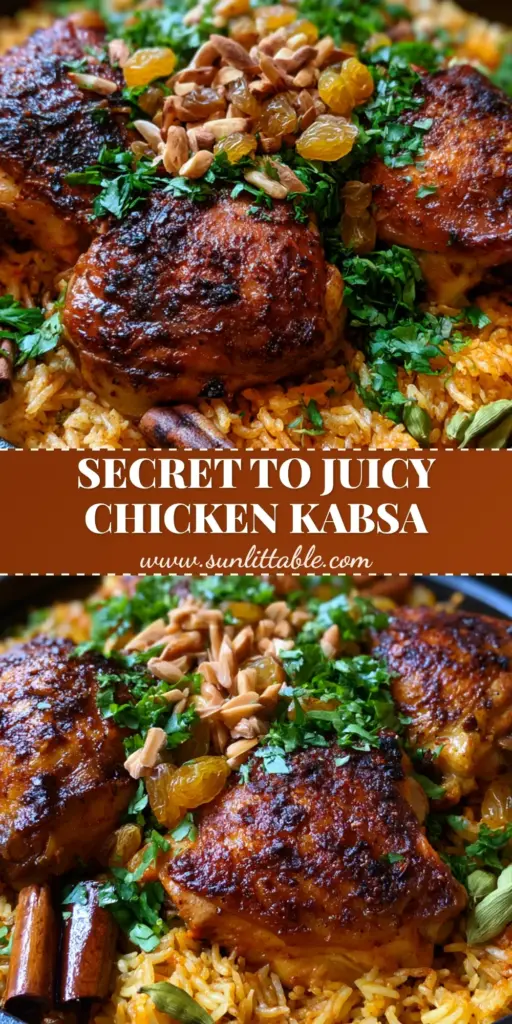
Arabic Chicken Kabsa: The Ultimate Guide to Saudi Arabia’s National Dish
Ingredients
Equipment
Method
- Season chicken with spice rub. Heat ghee in a cast iron pot and sear skin-side down for 6 minutes until glistening and charred. Flip and cook for 3 minutes, then remove.
- Sauté onions, garlic, tomato paste, cinnamon, and cardamom in the pot for 2 minutes until fragrant.
- Add stock, return chicken to pot, and simmer covered for 20-25 minutes.
- Remove chicken, add rinsed rice and saffron water. Place chicken on top, cover, and cook on low for 18 minutes. Rest for 10 minutes.
Notes
Don't skip the resting period; it's essential for the fluffiest texture.
Experience the Heritage of Saudi Arabia
Making Arabic Chicken Kabsa is a rewarding journey into the heart of Middle Eastern cuisine. The combination of the seared, glistening chicken and the aromatic, saffron-tinted rice creates a meal that is truly unforgettable. We hope this recipe brings a touch of Saudi hospitality to your kitchen table. If you enjoyed this recipe, please leave a comment below and share your photos with us! Don’t forget to save this to your favorite boards on Pinterest for your next dinner party.