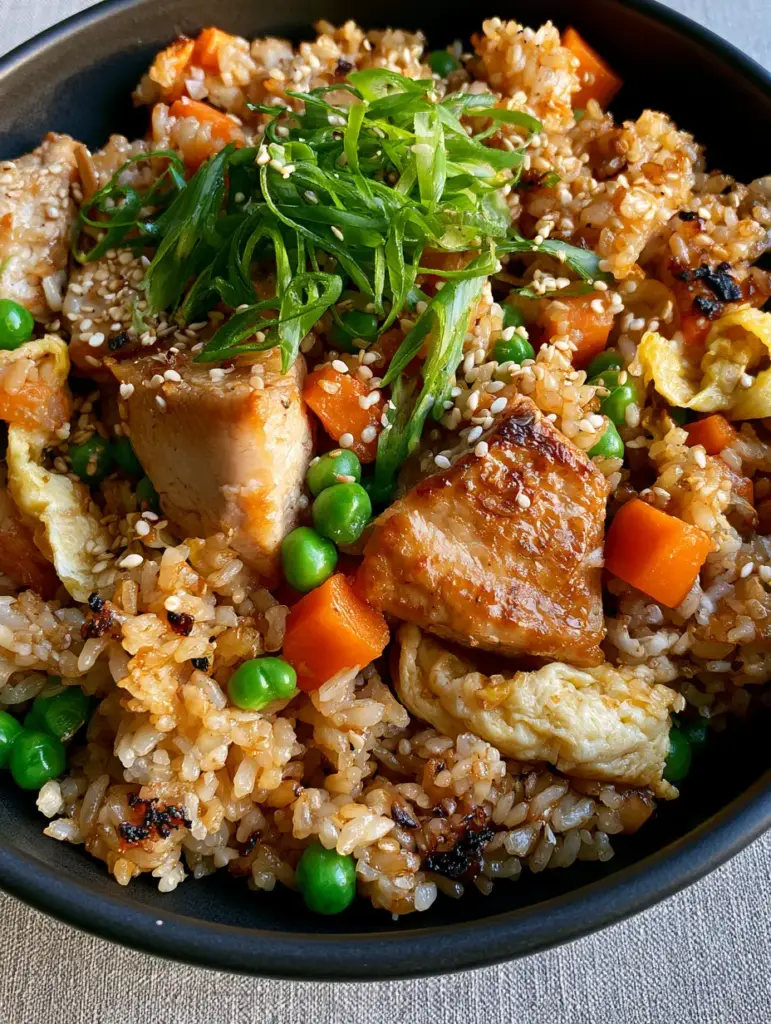
There is a profound culinary magic that happens when high heat meets chilled jasmine rice. We have all chased that restaurant-quality chicken fried rice—the kind where every single grain is distinct, glistening with a dark amber glaze, and kissed by the smokiness of a roaring wok.
This recipe isn’t just a way to use up leftovers; it is a masterclass in texture and temperature control. By focusing on searing the chicken to a deep golden brown and creating delicate ribbons of egg, we elevate this humble staple into a premium, macro-perfect dish.
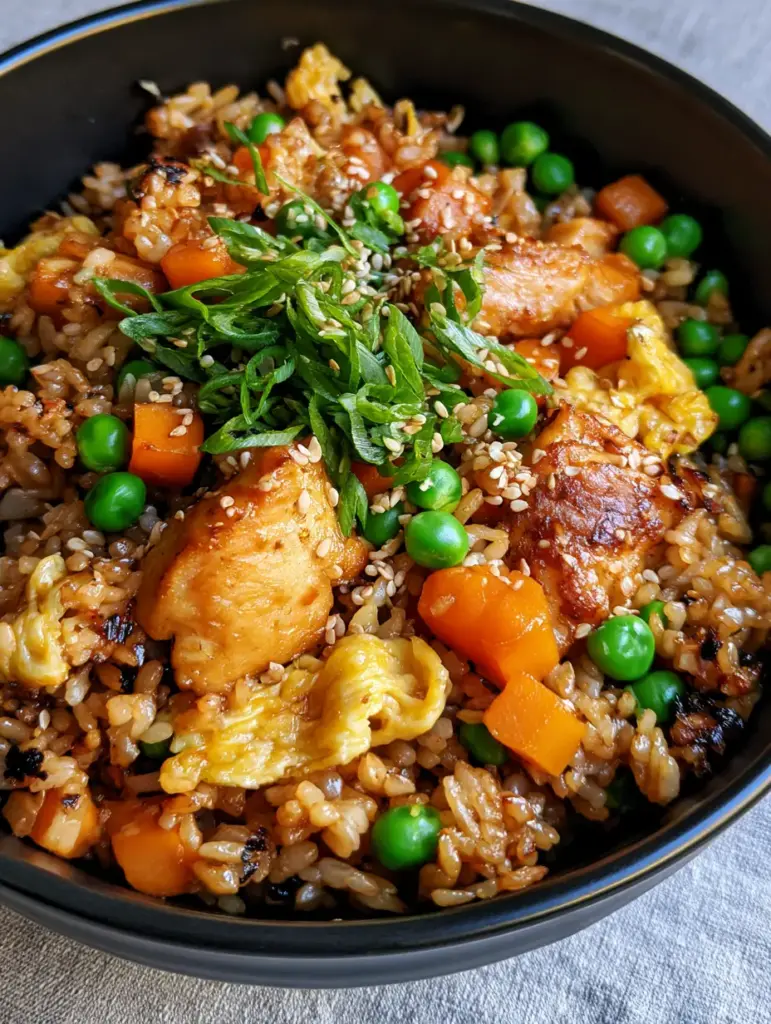
In the following guide, we will bridge the gap between home cooking and professional stir-fry techniques. You will learn how to achieve those elusive charred wok-char bits and ensure your vegetables remain vibrant emerald green and bright orange against the matte black of your serving bowl.
The Secrets to Achieving Perfect Wok Hei and Individual Rice Grains
- Grain Definition: We use day-old jasmine rice to ensure each grain remains individual and firm, preventing the dreaded mushy texture.
- Maillard Excellence: The chicken thighs are seared at high temperatures to create a golden-brown crust that holds up against the dark soy sauce glaze.
- Silky Contrast: Instead of scrambling the eggs into oblivion, we create soft yellow ribbons that provide a tender structural contrast to the toasted rice.
- Vibrant Aromatics: The addition of razor-thin scallions and toasted white sesame seeds adds both a visual pop and a layer of toasted, nutty fragrance.
Essential Components for a Premium Stir-Fry Experience
Achieving the visual and flavor profile of a professional kitchen requires a balance of fresh produce and high-quality pantry staples. Each ingredient serves a specific structural or flavor purpose.
Cold Jasmine Rice: 4 cups (600g) of cooked jasmine rice. Chilling the rice overnight dehydrates the surface of the grain, allowing it to “fry” and toast in the oil rather than steam.
Chicken Thighs: 1 lb (450g) of boneless, skinless chicken thighs, cut into 1-inch (2.5cm) chunks. Thighs are preferred over breast for their ability to remain juicy even after a hard sear.
Carrots & Peas: 1/2 cup (75g) finely diced carrots and 1/2 cup (75g) frozen petite peas. The carrots must be perfectly square-diced to ensure even cooking and a professional aesthetic.
The Egg Ribbons: 3 large eggs, beaten with a pinch of salt. These are cooked quickly into a thin omelet and then sliced into ribbons to mimic the look of premium Asian bistro plating.
Aromatics and Oil: 3 tbsp (45ml) neutral oil (like grapeseed), 3 cloves of minced garlic, and 1 tsp (5g) grated ginger. High-smoke-point oil is mandatory for the searing process.
The Dark Amber Glaze: 2 tbsp (30ml) dark soy sauce, 1 tbsp (15ml) oyster sauce, and 1 tsp (5ml) toasted sesame oil. This combination provides the deep color and savory “umami” punch seen in the visual blueprint.
Garnish: 3 scallions, razor-thinly sliced on a bias, and 1 tsp (5g) toasted white sesame seeds. These provide the final textural layer and fresh aromatic finish.
Must-Have Equipment for Wok-Style Searing
To achieve the “charred edges” described in our visual prompt, you need tools that can handle and distribute intense heat. While a traditional carbon steel wok is ideal, a heavy-bottomed cast iron or stainless steel skillet is a fantastic alternative.
You will also need a sharp chef’s knife for the “square-diced” carrots and a wide spatula or wok turner. The wide surface area of the spatula allows you to toss the rice without breaking the individual grains.
Step-by-Step Evolution of the Ultimate Chicken Fried Rice
Phase 1: Searing the Golden-Brown Chicken
Heat 1 tbsp (15ml) of oil in your wok over medium-high heat until it begins to shimmer. Add the chicken pieces in a single layer, ensuring they are not crowded to prevent steaming.
Leave the chicken undisturbed for 2-3 minutes. You are looking for a deep, golden-brown crust to form—this is the foundation of the dish’s flavor profile.
Once seared, flip the pieces and cook for another 2 minutes until cooked through. Remove the chicken from the pan and set it aside to rest.
Phase 2: Creating the Silky Egg Ribbons
Wipe the wok clean and add a small drizzle of oil. Pour in the beaten eggs, swirling the pan to create a thin, even layer.
As soon as the egg sets but remains glossy and soft, slide it out onto a cutting board. Roll the thin omelet and slice it into 1/4-inch (6mm) ribbons.
This technique prevents the egg from becoming dry and ensures those “silky yellow ribbons” are visible throughout the final chicken fried rice.
Phase 3: The High-Heat Veggie Sauté
Add another tablespoon of oil to the wok. Toss in the finely diced carrots, stir-frying for 2 minutes until they are tender-crisp.
Add the garlic and ginger, stirring constantly for 30 seconds until fragrant. Do not let the garlic brown, as it will turn bitter.
Incorporate the peas last; their vibrant emerald green color is best preserved by short exposure to heat.
Phase 4: Toasting the Rice and The Final Glaze
Turn the heat to high. Add the remaining oil and the cold jasmine rice. Use your spatula to break up any clumps, pressing the grains against the hot surface of the wok.
Listen for the “crackle”—this is the sound of the rice toasting. Continue to toss for 3-4 minutes until you see visible dark charred edges on the grains.
Pour the dark soy sauce, oyster sauce, and sesame oil over the rice. Toss vigorously until every grain is glistening with a light amber glaze.
Phase 5: The Final Assembly
Return the seared chicken and egg ribbons to the wok. Toss gently for 1 minute to harmonize the temperatures and flavors.
Turn off the heat. The residual heat will finish the dish without overcooking the delicate egg ribbons.
Pro Tips for Restaurant-Quality Results
- The “Dry Rice” Rule: If you don’t have leftover rice, cook a fresh batch with 15% less water, spread it on a tray, and freeze it for 20 minutes before frying.
- Don’t Crowd the Pan: If your stove isn’t powerful, cook the rice in two batches. Overcrowding leads to steaming rather than searing.
- Quality Soy Matters: Use “Dark Soy Sauce” specifically for the color; it is thicker and less salty than regular soy sauce, providing that premium amber glow.
- The Scallion Finish: Always add scallions at the very end. The contrast between the hot rice and the crisp, fresh greens is essential for the palate.
Storage, Reheating, and Freezing Advice
Leftover chicken fried rice is arguably even better the next day as the flavors continue to meld. Store it in an airtight container in the refrigerator for up to 3 days.
To reheat, add a teaspoon of water to the rice and microwave it covered, or quickly toss it in a hot pan with a drop of oil to restore the toasted texture.
You can freeze this dish for up to 2 months. Thaw it overnight in the fridge before reheating to ensure the chicken stays tender and the rice doesn’t become mushy.
Pairing Your Chicken Fried Rice with Other Favorites
This dish is a complete meal on its own, but it also pairs beautifully with other Asian-inspired textures. For a lighter accompaniment, consider a crisp avocado chicken salad.
If you are building a multi-course dinner, this rice serves as a perfect base for teriyaki chicken rice bowls or even a side for moo-shu chicken.
For those who love global fusion, the charred edges of the rice provide a surprising but delicious complement to the spices found in chicken tandoori.
Expert Troubleshooting (FAQ)
Yes, but you must be careful not to overcook it. Breast meat dries out faster under high heat. Sear it quickly and remove it from the pan as soon as it is cooked through.
For the ‘silky ribbon’ look, yes. Scrambling the egg directly into the rice results in smaller, less distinct bits. Cooking it as a thin omelet first allows for beautiful, tender ribbons.
The signature amber color comes from dark soy sauce. It is thicker and less salty than light soy sauce, providing a deep pigment and a rich, slightly sweet molasses flavor.
Mushy rice is usually caused by using freshly cooked, warm rice. The steam trapped in the grains softens them. Using day-old, chilled rice ensures the grains stay individual and toast properly.
The Ultimate Chicken Fried Rice Recipe Card
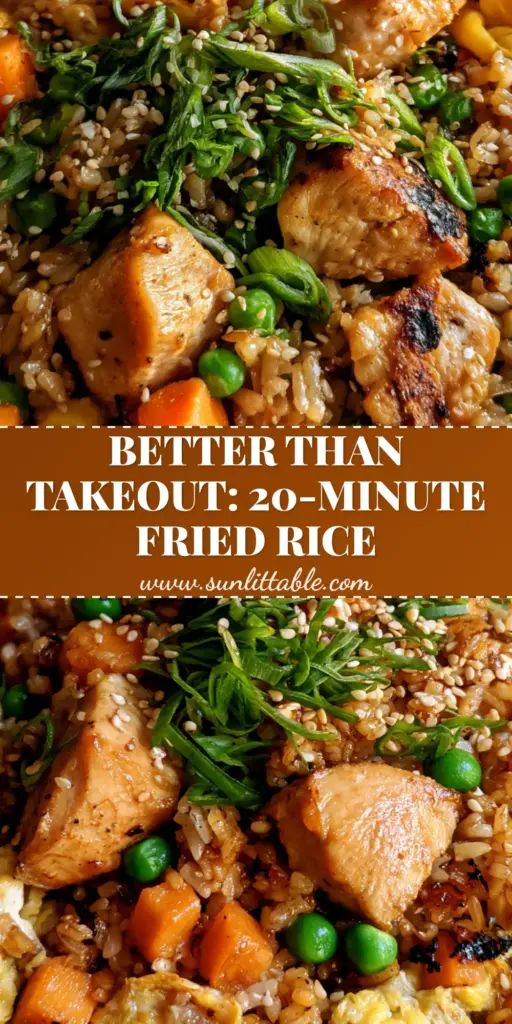
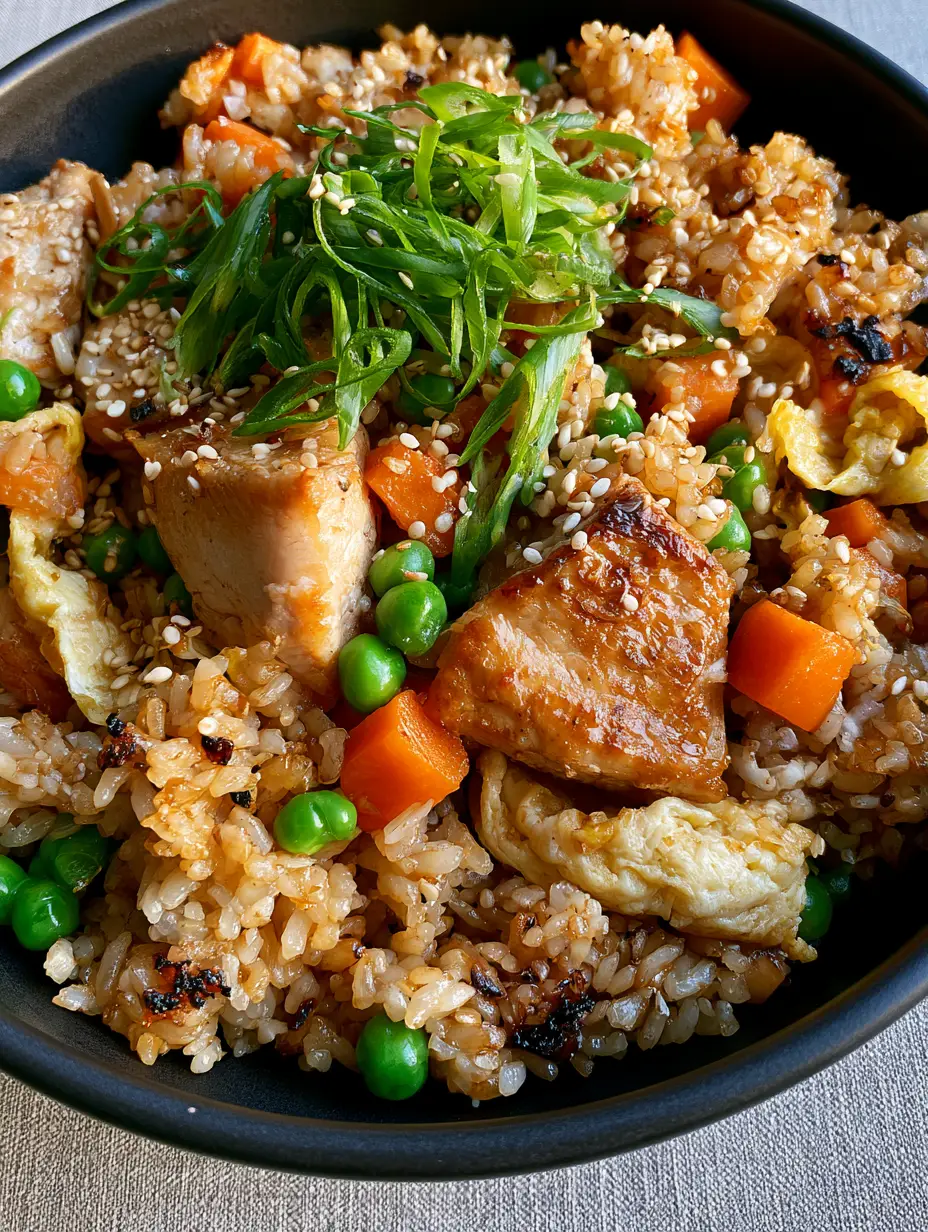
Chicken Fried Rice with Golden Seared Chicken and Silky Egg Ribbons
Ingredients
Equipment
Method
- Heat oil in wok and sear chicken pieces until a deep golden-brown crust forms. Remove and set aside.
- Pour beaten eggs into the wok to make a thin omelet. Slice into ribbons and set aside.
- Sauté carrots, garlic, and ginger until fragrant, then add peas.
- Add cold rice to the wok on high heat, tossing until grains are toasted and slightly charred.
- Pour in sauces, return chicken and eggs to the pan, toss to coat, and garnish with scallions and sesame seeds.
Notes
Dark soy sauce is essential for the amber color without excessive saltiness.
Join the Sunlit Table Community
We hope this recipe brings the vibrant colors and smoky aromas of a professional kitchen into your home. The secret to a great chicken fried rice is all in the preparation and the heat.
If you enjoyed this dish, please leave a comment below and let us know how your rice toasted up! Don’t forget to follow us on Pinterest for more visually stunning recipe inspiration.