There is something inherently luxurious about a coconut chicken recipe that achieves the perfect balance between high-heat searing and gentle, velvety simmering. This isn’t your standard weeknight curry; this is a modern, visually stunning masterpiece that brings professional culinary aesthetics directly to your dining table. If you have been searching for a dish that tastes as vibrant as it looks, you have arrived at the definitive version.
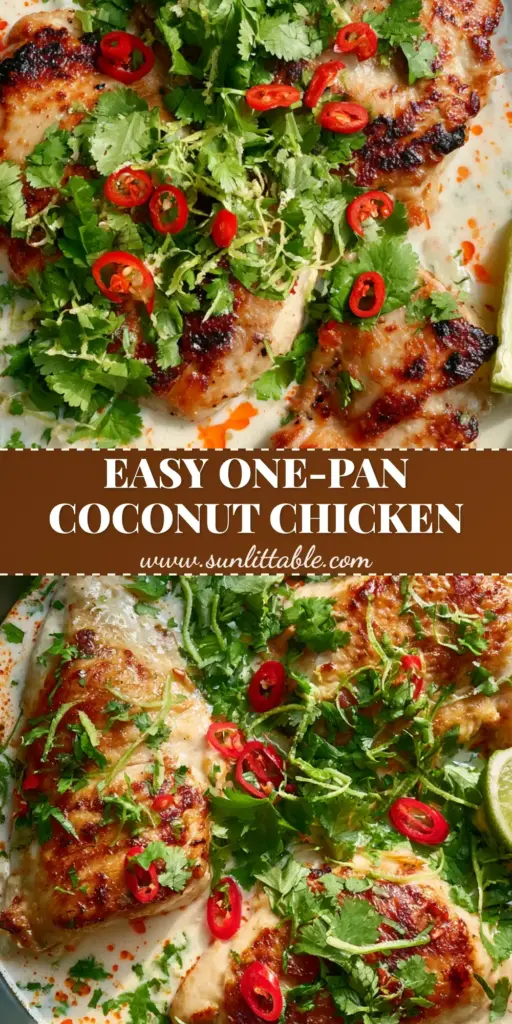
The magic of this coconut chicken recipe lies in the textural contrast. We begin with large pieces of succulent chicken breast, seared until they develop deep, caramelized edges that provide a savory counterpoint to the sweetness of the cream. The sauce itself is a thick, ivory pool of concentrated coconut fat, brightened by the sharp acidity of fresh lime zest and the creeping heat of orange-hued chili oil.
Every element in this dish serves a forensic purpose. From the fine ribbons of lime zest that cut through the richness of the coconut cream to the thin rings of bird’s eye chilies that offer pops of heat, this recipe is designed to engage every part of your palate. Whether you are serving this for a special occasion or elevating your meal prep, the results are consistently restaurant-quality.
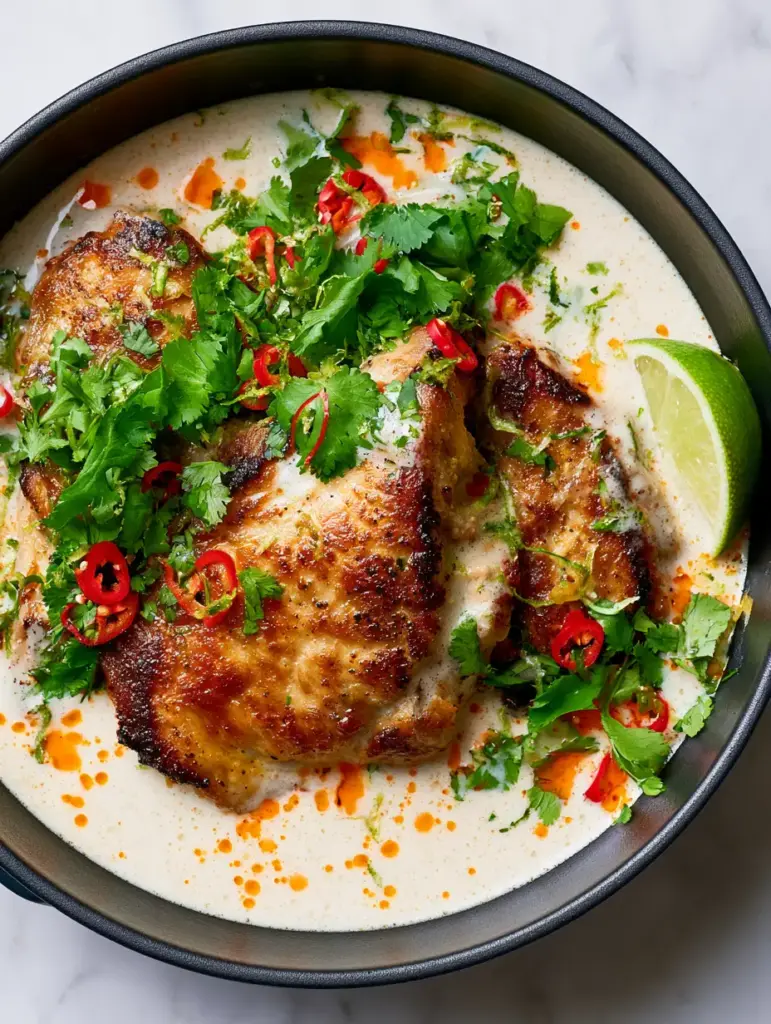
Why This Velvety Skillet Chicken Works
- The Maillard Reaction: We prioritize a hard sear on the chicken breasts to ensure a golden-brown crust that holds its own when partially submerged in the sauce.
- Emulsified Cream Base: By using full-fat coconut cream rather than thin milk, we achieve a thick, velvety texture that coats the back of a spoon perfectly.
- The Acid-Fat Balance: Fresh lime juice and zest ribbons are added at the end to ensure the bright citrus notes aren’t lost in the cooking process.
- Visually Stunning Garnish: The droplets of orange chili oil against the white sauce create a high-contrast “drool-worthy” effect that is perfect for food photography.
The Pantry Staples for This Velvety Sauce
Chicken Breasts: 1.5 lbs (680g) of boneless, skinless chicken breast. We cut these into large, thick pieces to ensure they remain juicy while we achieve that critical golden-brown exterior sear.
Coconut Cream: 1 can (400ml) of unsweetened full-fat coconut cream. Unlike coconut milk, the cream provides the density required for the “velvety” finish described in our visual blueprint.
Neutral Searing Oil: 2 tbsp (30ml) of avocado or grapeseed oil. These oils have high smoke points, allowing us to brown the chicken without the oil breaking down or smoking.
Fresh Aromatics: 3 cloves of minced garlic and 1 tbsp (15g) of freshly grated ginger. These foundational ingredients provide the aromatic “backbone” that balances the tropical sweetness of the coconut.
Orange Chili Oil: 2 tbsp (30ml) for finishing. These orange droplets aren’t just for heat; they provide the essential visual “flecked” texture against the white cream sauce.
Bird’s Eye Chilies: 2-3 red chilies, sliced into thin rings. These provide a sharp, clean heat and a vibrant red visual pop that contrasts beautifully with the cilantro leaves.
Fresh Cilantro: 1/2 cup (15g) of fresh leaves. Cilantro adds an earthy, herbal note that is essential for cutting through the saturated fats of the coconut.
Lime Zest and Wedges: 2 whole limes. One is used for creating fine ribbons of zest, while the other is cut into wedges for that final, glistening squeeze of juice at the table.
Kosher Salt and White Pepper: To taste. We use white pepper specifically to maintain the pristine white appearance of the sauce while still providing a gentle, floral heat.
Essential Tools for Modern Skillet Cooking
To achieve the specific look of our coconut chicken recipe, a matte black ceramic or cast-iron skillet is highly recommended. The dark background of the pan makes the white sauce and vibrant green cilantro visually “pop.” You will also need a microplane or zester to create those delicate lime ribbons and a high-quality chef’s knife for precision-slicing the red chilies.
Mastering the Golden Sear and Creamy Base
Achieving the Perfect Caramelized Crust
Pat the chicken breast pieces completely dry with paper towels. Any moisture on the surface of the meat will create steam, preventing the formation of that golden-brown crust. Season generously with salt and white pepper.
Heat your matte black skillet over medium-high heat with the neutral oil. Once the oil is shimmering (almost at the smoking point), add the chicken pieces. Do not overcrowd the pan. Let the chicken sit undisturbed for 3-4 minutes until a deep golden-brown crust forms. Flip and sear for another 2 minutes, then remove the chicken and set aside.
Building the Aromatic Foundation
Lower the heat to medium. In the same skillet, add the minced garlic and grated ginger. Sauté for only 30-60 seconds. You want to hear a gentle sizzle and smell the fragrance, but do not let the garlic brown, as this will turn the white sauce bitter.
If you enjoy this flavor profile but want something lighter for lunch, consider our Asian crunch chicken salad which uses similar aromatic notes in a fresh, crisp format.
Simmering the Velvety Coconut Cream
Pour the coconut cream into the skillet. Use a wooden spoon to gently scrape the bottom of the pan, incorporating any browned bits (fond) from the chicken. Bring the sauce to a gentle simmer.
Slide the seared chicken back into the skillet, ensuring they are only partially submerged so the golden-brown tops remain visible. Simmer for 5-7 minutes until the sauce thickens and the chicken reaches an internal temperature of 165°F (74°C).
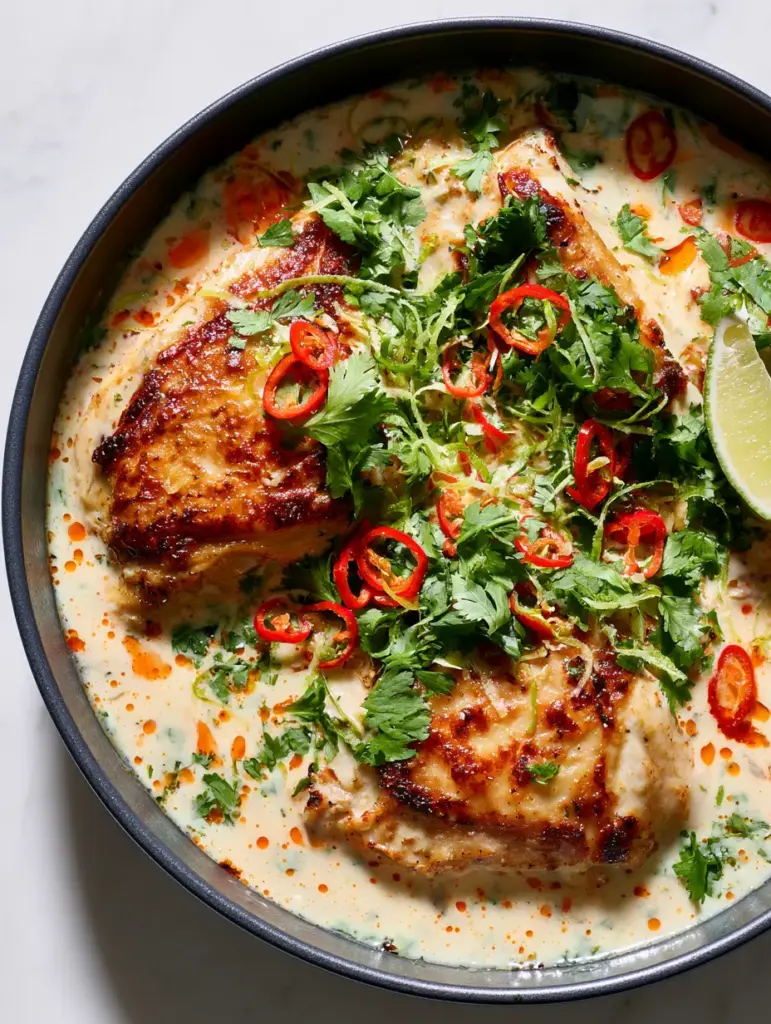
The Art of the Garnish: Recreating the Visual Blueprint
Once the chicken is cooked and the sauce has reached a thick, velvety consistency, remove the pan from the heat. This is where we transform the dish into a visual masterpiece. Use a spoon to carefully dot the surface with the orange chili oil. These should look like tiny, distinct droplets, not a stirred-in swirl.
Scatter the thin rings of red bird’s eye chilies across the top. Follow with the fresh cilantro leaves and the fine ribbons of lime zest. Finally, place a glistening lime wedge on the side of the skillet. The residual heat of the pan will slightly warm the aromatics, releasing their oils just as you serve.
Expert Tips for Recipe Perfection
- Don’t Stir the Oil: To get the specific “flecked” look, do not stir the chili oil into the sauce. Let the droplets sit on the surface for maximum visual impact.
- Prevent Curdling: Never boil the coconut cream vigorously. A gentle simmer keeps the fat emulsified and the texture velvety.
- Zest Before Juicing: Always remove the lime zest ribbons while the lime is still whole and firm; it is nearly impossible to zest a squeezed lime.
- Controlled Heat: If you find bird’s eye chilies too hot, deseed them before slicing, or substitute with milder red Fresno chilies.
Storage, Reheating & Freezing Guidance
This coconut chicken recipe is best served fresh to maintain the texture of the garnishes. However, leftovers can be stored in an airtight container in the refrigerator for up to 3 days. When reheating, do so gently on the stovetop over low heat. You may need to add a splash of water or extra coconut milk to loosen the sauce, as it will thicken significantly when cold.
We do not recommend freezing this dish. The high fat content of the coconut cream can separate during the thawing process, resulting in a grainy texture that loses its signature “velvety” appeal.
What to Serve With Creamy Coconut Chicken
To soak up the luxurious sauce, we recommend serving this over a bed of jasmine rice. If you want to lean into the tropical theme, this pairs excellently with Hawaiian chicken with coconut rice. For those who prefer a more structured meal, this chicken can be the centerpiece for a coconut chicken rice bowl.
If you have leftover chicken, it can be shredded and used the next day in chicken enchiladas or even transformed into a unique Persian saffron chicken fusion dish.
Frequently Asked Questions
You can, but the sauce will be significantly thinner. To achieve the ‘thick and velvety’ texture shown in the recipe, coconut cream is highly recommended as it has a higher fat and lower water content.
The key is a very hot pan and patting the chicken completely dry. This allows the Maillard reaction to occur quickly on the surface before the heat penetrates too deep into the breast meat.
It has a moderate heat level from the bird’s eye chilies and chili oil. You can easily control the spice by removing the chili seeds or using a milder oil.
Use a sharp microplane or a channel knife. If you don’t have those, use a vegetable peeler to take off thin strips of skin (avoiding the white pith) and slice them into tiny matchsticks with a chef’s knife.
Coconut cream can separate if boiled too vigorously or if acidic ingredients (like lime juice) are added too early over high heat. Always maintain a gentle simmer and add your lime at the very end.
The Ultimate Coconut Chicken with Chili Oil & Lime
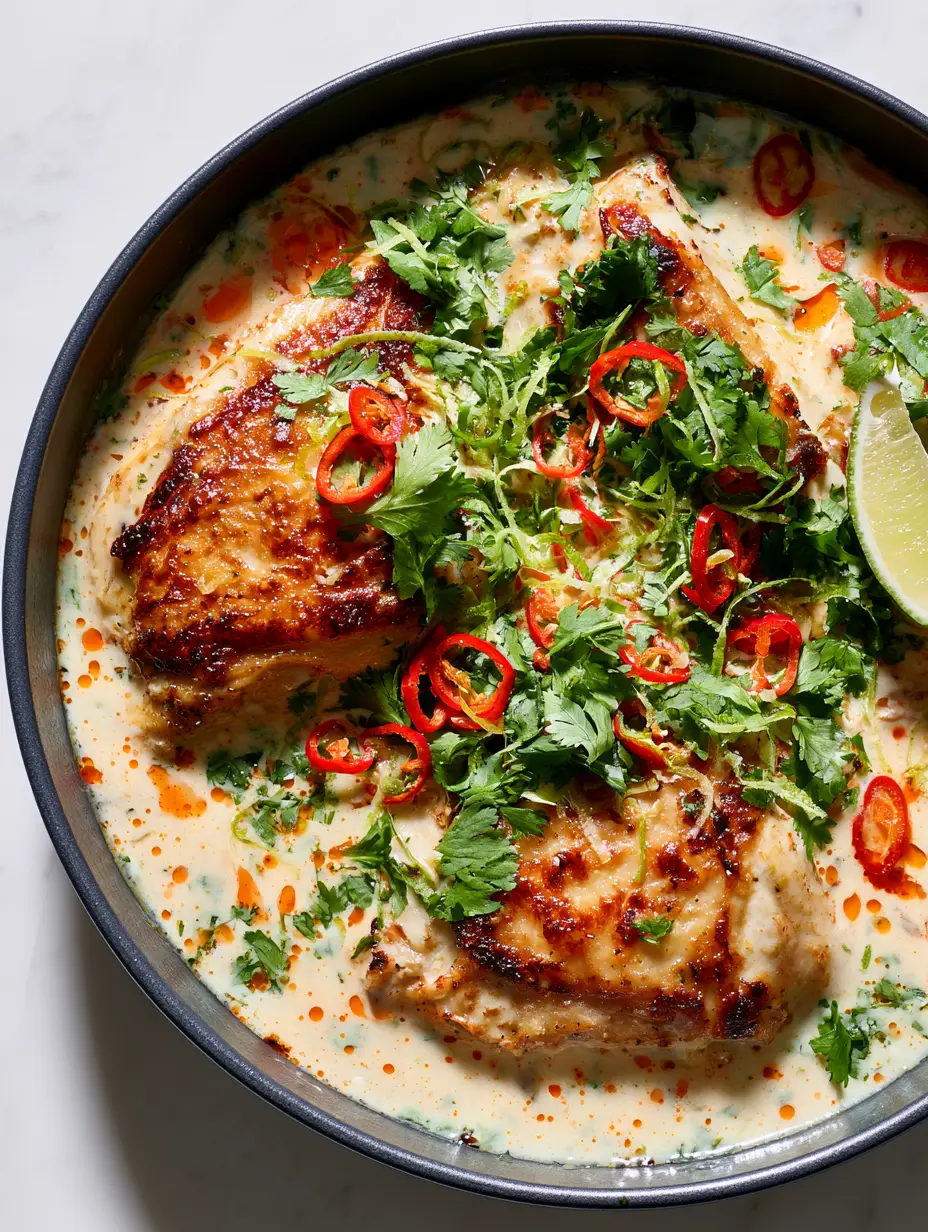
Coconut Chicken Recipe: Creamy Skillet Chicken with Chili Oil & Lime
Ingredients
Equipment
Method
- Pat chicken dry and season with salt. Heat oil in skillet over medium-high heat. Sear chicken pieces for 3-4 minutes per side until deep golden-brown caramelized edges form. Remove from pan.
- Reduce heat to medium. Sauté garlic and ginger for 30-60 seconds until fragrant but not browned.
- Add coconut cream to skillet, scraping up browned bits. Return chicken to pan, partially submerged. Simmer for 5-7 minutes until sauce is thick and velvety.
- Remove from heat. Dot with orange chili oil droplets. Top with red chili rings, cilantro leaves, and lime zest ribbons. Serve with a lime wedge.
Notes
Do not stir the chili oil; let the droplets float for the visual effect.
Final Thoughts and Culinary Inspiration
This skillet dish is a testament to how simple ingredients, when treated with professional technique, can create a world-class dining experience. The contrast of the matte black pan, the ivory sauce, and the vibrant garnishes makes it a favorite for those who appreciate the aesthetics of food as much as the flavor.
If you loved making this, please leave a comment and a star rating below! Don’t forget to share your creations and pin this recipe to your favorite boards on Pinterest so you can find it whenever the craving for a velvety coconut chicken recipe hits.