There is a specific, undeniable magic that happens when a rustic cast iron pot is placed in the center of a table, its lid lifted to reveal a cloud of fragrant steam. The sight of Chicken Jollof Rice, with its signature deep orange-red hue and perfectly separated grains, is a culinary masterpiece of West African heritage. This isn’t just a meal; it’s a celebration of spice, patience, and the art of the perfect rice-to-sauce ratio.
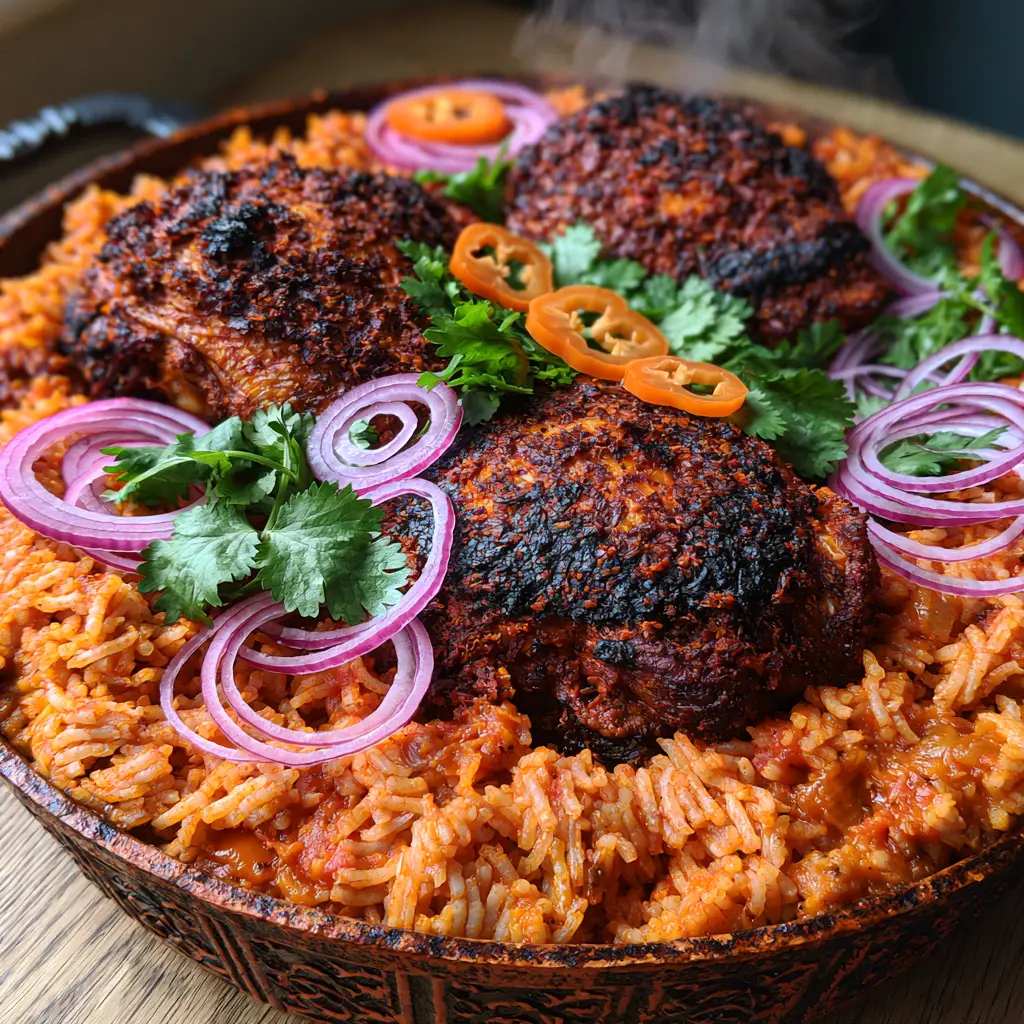
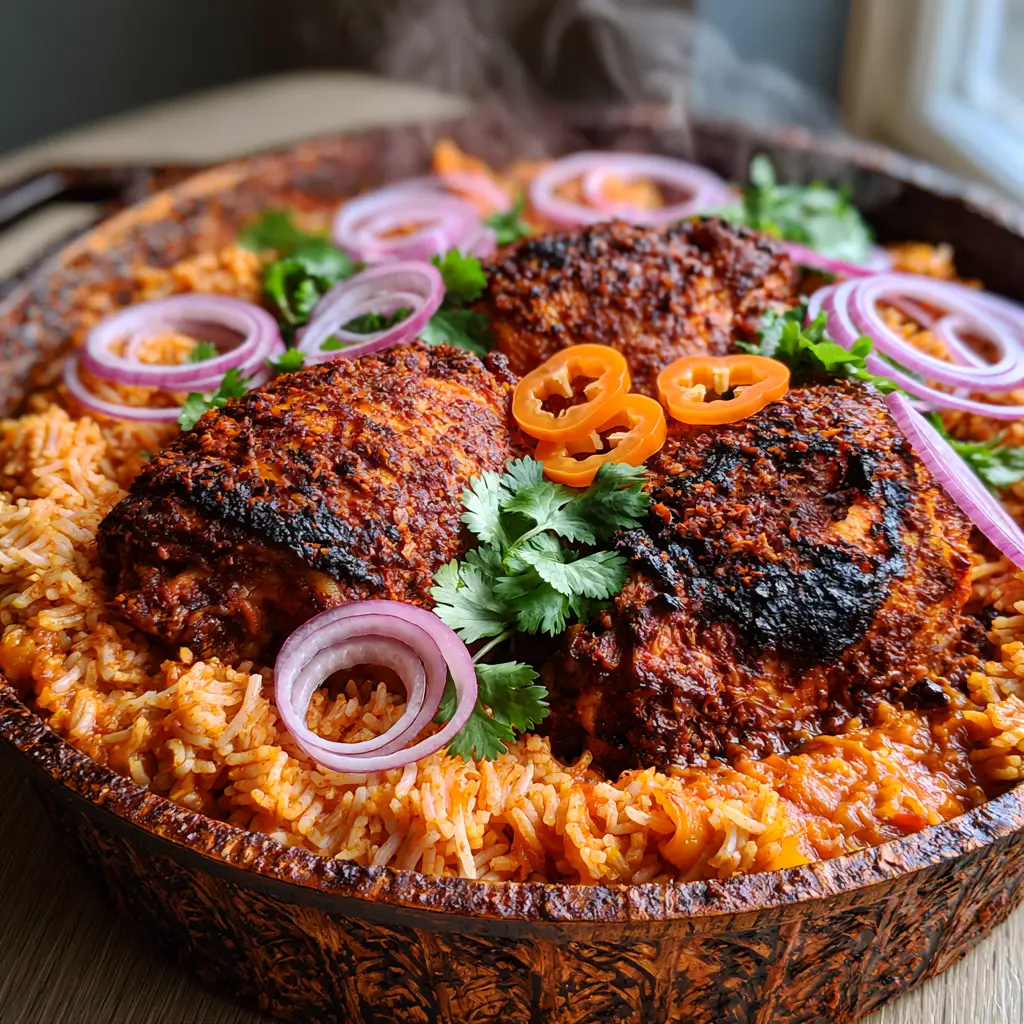
In this recipe, we are capturing that exact “handheld smartphone” aesthetic—succulent chicken thighs with dark seared char marks nestled into a bed of vibrant, fluffy parboiled rice. We garnish the dish with paper-thin raw red onion rings, bright green cilantro, and the fiery pop of orange scotch bonnet peppers. This is the ultimate guide to achieving that authentic “party rice” flavor in your own kitchen.
Why This Chicken Jollof Rice Recipe Works
- Perfectly Fluffy Grains: By using long-grain parboiled rice and a precise steaming method, we ensure every grain is distinct and never mushy.
- Vibrant Pepper Base: A concentrated reduction of red bell peppers and tomatoes provides the deep, iconic orange-red color without artificial dyes.
- Textural Contrast: The crunch of raw red onions and the snap of fresh cilantro balance the rich, tender chicken and savory rice.
- Professional Searing: Our technique for spice-rubbed chicken ensures a crispy, charred skin that holds up against the moisture of the rice.
The Anatomy of the Perfect Jollof Rice Base
The foundation of any elite Chicken Jollof Rice is the obe ata, or the fried pepper sauce. This isn’t a simple tomato sauce; it is a complex reduction that requires frying out the water content until the oil separates from the puree. This process caramelizes the natural sugars in the red bell peppers, creating a sweetness that balances the heat of the scotch bonnets.
While many home cooks might reach for jasmine rice, true Jollof connoisseurs know that long-grain parboiled rice is the gold standard for this dish. Parboiled rice has been partially boiled in its husk, which gelatinizes the starch inside the grain. This makes the rice sturdier, allowing it to absorb massive amounts of flavorful broth without breaking down into a paste. If you enjoy this rice-centric approach, you might also love our Arabic Chicken Kabsa for another perspective on spiced rice.
Essential Ingredients for Authentic Results
The Chicken and Spice Rub
3-4 large (approx. 800g) Chicken Thighs: Bone-in, skin-on thighs are non-negotiable for maximum flavor and that specific charred visual appeal. The skin acts as a protective barrier, keeping the meat succulent while the exterior reaches a deep sear.
1 tbsp (15g) Curry Powder: Use a high-quality West African or Madras curry powder for that nostalgic, earthy undertone. This provides the yellow-gold tint to the chicken skin before it hits the pan.
1 tsp (5g) Dried Thyme: A foundational herb in Jollof seasoning that adds a woody, floral note. Rub it between your palms to release the oils before applying it to the meat.
The Red Pepper Reduction
3 large Red Bell Peppers: These provide the bulk of the color and the sweet, vegetal base of the sauce. Ensure they are deseeded to maintain a smooth texture in the puree.
1 can (400g) Plum Tomatoes: Canned plum tomatoes often have a more consistent acidity and sugar content than fresh ones, providing a reliable foundation for the sauce. You can also use fresh, but ensure they are very ripe.
2-3 Scotch Bonnet Peppers: These provide the signature “kick.” We use some in the puree and save one for the sliced garnish to add a pop of orange color.
The Grains and Aromatics
3 cups (600g) Long-Grain Parboiled Rice: Rinse this rice thoroughly until the water runs clear to remove surface starch. This is the secret to the “separated grain” look seen in our photography.
1 large Red Onion: Half is blended into the sauce, and the other half is sliced paper-thin for the raw garnish. The raw onion provides a sharp, crisp finish to the heavy dish.
Fresh Cilantro Sprigs: While traditional Jollof sometimes uses parsley, the bright, citrusy notes of cilantro perfectly complement the charred chicken skin.
Must-Have Equipment for a Rustic Presentation
To achieve the visual result of a rustic, steaming pot, a Cast Iron Dutch Oven or Pot is essential. Cast iron retains heat more effectively than stainless steel, creating an even “oven” effect inside the pot. This is what allows the rice at the very bottom to slightly toast—creating the coveted “bottom pot” or “socarrat” that Jollof lovers crave.
You will also need a high-speed blender to create a perfectly smooth pepper reduction. A coarse puree will result in “specky” rice, whereas a smooth blend will coat every single grain in a uniform, vibrant orange-red coat. For more one-pot inspiration, check out our Salsa Verde Chicken Rice Skillet.
Step-by-Step Instructions to Master Chicken Jollof Rice
Phase 1: Preparing the Spice-Rubbed Chicken
Pat the chicken thighs bone-dry with paper towels. Any moisture on the skin will lead to steaming rather than searing. In a small bowl, mix your curry powder, salt, thyme, and a touch of oil to create a paste.
Rub the paste generously over the skin and under it. Heat 2 tbsp (30ml) of high-smoke-point oil in your cast iron pot over medium-high heat. Place the chicken skin-side down and do not move them for 5-7 minutes.
Visual Cue: You are looking for a deep golden-brown crust with localized dark seared char marks. Once achieved, flip and sear the bottom for 3 minutes, then remove the chicken from the pot and set aside. It will finish cooking with the rice.
Phase 2: Concentrating the Pepper Sauce
In your blender, combine the red bell peppers, plum tomatoes, half the onion, and 2 scotch bonnets. Blend until completely smooth. Pour this mixture into the same cast iron pot used for the chicken, using the leftover chicken fat (fond) as a flavor base.
Cook this mixture over medium heat, stirring frequently. You must reduce this liquid by half. You will know it is ready when the sauce turns from a bright pinkish-red to a deep, dark maroon and the oil begins to pool on the surface.
Phase 3: The Rice Infusion and Steaming
Add the washed parboiled rice to the concentrated sauce. Stir well to ensure every grain is coated in the oil and pepper base. Pour in 3 cups (720ml) of high-quality chicken stock. The liquid should just barely cover the rice.
Place the seared chicken thighs on top of the rice, skin-side up. Cover the pot tightly with a layer of aluminum foil, then place the lid on top. This creates a pressurized steam environment. Turn the heat to the lowest setting and simmer for 30-35 minutes.
Phase 4: The Final Flourish and Garnish
Once the rice is tender and the liquid is fully absorbed, remove the pot from the heat. Let it sit, covered, for 10 minutes. This allows the moisture to redistribute, ensuring the grains don’t stick together.
Garnish the pot with your paper-thin red onion rings, fresh cilantro sprigs, and the remaining sliced scotch bonnet. The heat from the rice will slightly soften the onions, but they should remain raw and vibrant for that authentic food photography style.
Expert Tips for Success
- The Foil Trick: Never skip the aluminum foil under the lid. It traps the steam that is vital for cooking parboiled rice evenly. Without it, the top layer of rice may remain hard.
- Don’t Peek: Opening the lid during the first 25 minutes releases the pressure and steam, which can lead to unevenly cooked grains. Trust the process.
- Wash Your Rice: Rinse the parboiled rice at least 5-6 times. Removing the excess starch is the only way to get those perfectly separated grains.
- Manage the Heat: If your stove runs hot, use a heat diffuser. Cast iron holds a lot of energy, and you want a gentle simmer, not a vigorous boil, once the lid goes on.
What to Serve With Your Jollof Rice
This dish is a powerhouse on its own, but it pairs beautifully with refreshing sides that cut through the richness of the chicken. Consider serving it alongside a crisp Healthy Chicken Salad for a balanced lunch, or even some Haitian Chicken Fritters for a multi-textural feast.
In West Africa, it is common to see Jollof served with fried plantains (dodo) or a simple coleslaw. The sweetness of the plantains is a perfect foil for the heat of the scotch bonnets used in our Chicken Jollof Rice.
Frequently Asked Questions
While possible, Jasmine rice is much softer and tends to become mushy in the heavy Jollof sauce. Parboiled rice is highly recommended for the classic separated grain texture.
The smokiness in home-cooked Jollof comes from ‘burning’ the rice slightly at the bottom of the cast iron pot and trapping that steam with aluminum foil.
Scotch bonnets are essential for the flavor profile. If you are heat-sensitive, blend only one pepper and remove the seeds, but don’t omit them entirely.
The raw red onions provide a sharp, fresh crunch that cuts through the rich, oily, and savory notes of the fried pepper sauce and chicken fat.
This usually happens if steam escapes the pot. Ensure you use a tight foil seal and don’t lift the lid during the first 25 minutes of cooking.
The Ultimate Chicken Jollof Rice Recipe
Chicken Jollof Rice with Smoky Charred Chicken Thighs
Ingredients
Equipment
Method
- Pat chicken thighs dry. Rub with curry powder, salt, thyme, and a dash of oil.
- In a cast iron pot, sear chicken skin-side down over medium-high heat for 5-7 minutes until dark char marks appear. Flip and sear for 3 minutes. Remove and set aside.
- Blend bell peppers, tomatoes, half the onion, and 2 scotch bonnets until smooth.
- Fry the puree in the chicken fat for 15-20 minutes until darkened and oil separates.
- Stir in washed rice and stock. Place chicken on top. Cover with foil and a lid. Simmer on low for 30-35 minutes.
- Let rest for 10 minutes. Garnish with thin red onion slices, cilantro, and remaining scotch bonnet slices before serving.
Notes
The aluminum foil seal is critical for preventing hard rice grains.
Closing & Call to Action
Mastering Chicken Jollof Rice is a journey into the heart of West African flavor. With its smoky charred chicken and vibrant, fluffy rice, this dish is guaranteed to become a staple in your home cooking rotation. The combination of concentrated pepper sauce and the rustic charm of the cast iron pot creates a meal that is as beautiful to look at as it is delicious to eat.
Did you achieve the perfect “bottom pot” rice? We want to hear about it! Leave a comment below and share your results. Don’t forget to follow us on Pinterest for more stunning recipe inspiration and tips for the enthusiastic home cook.