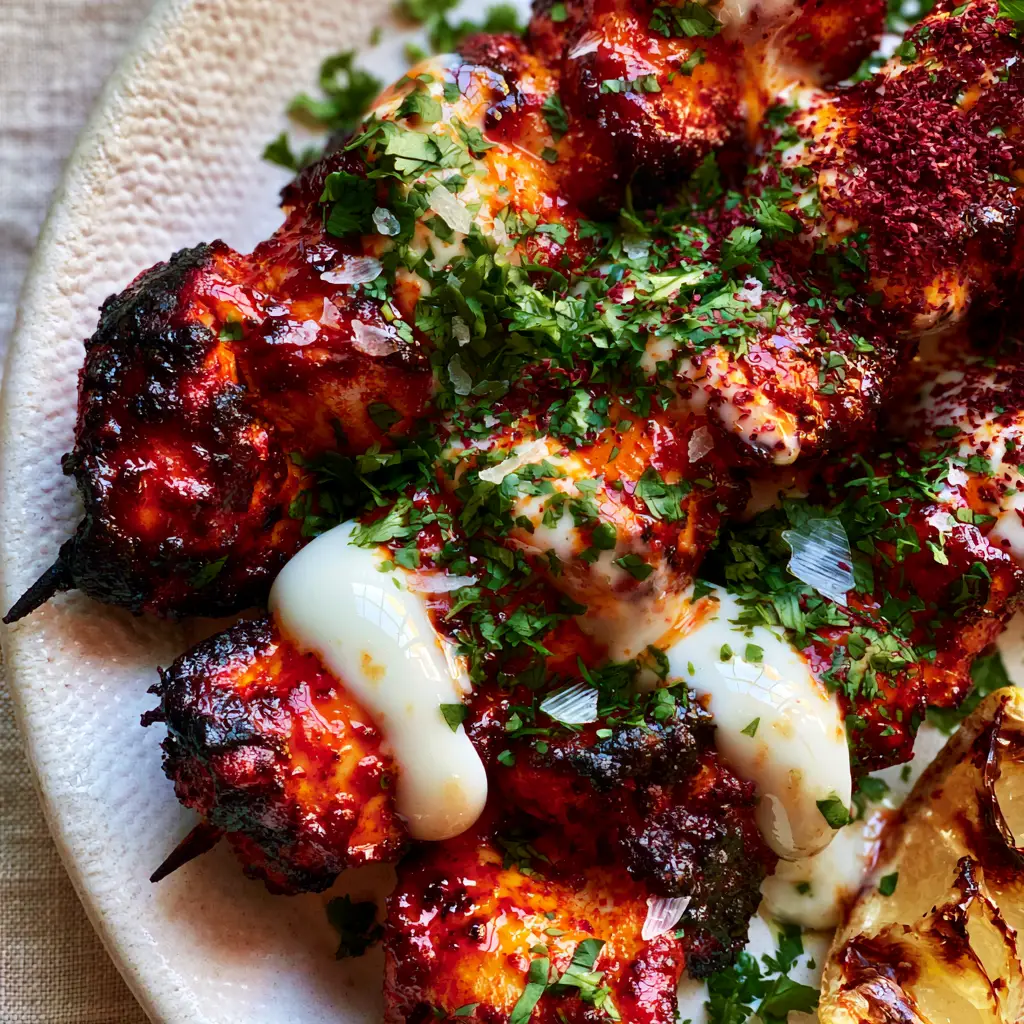
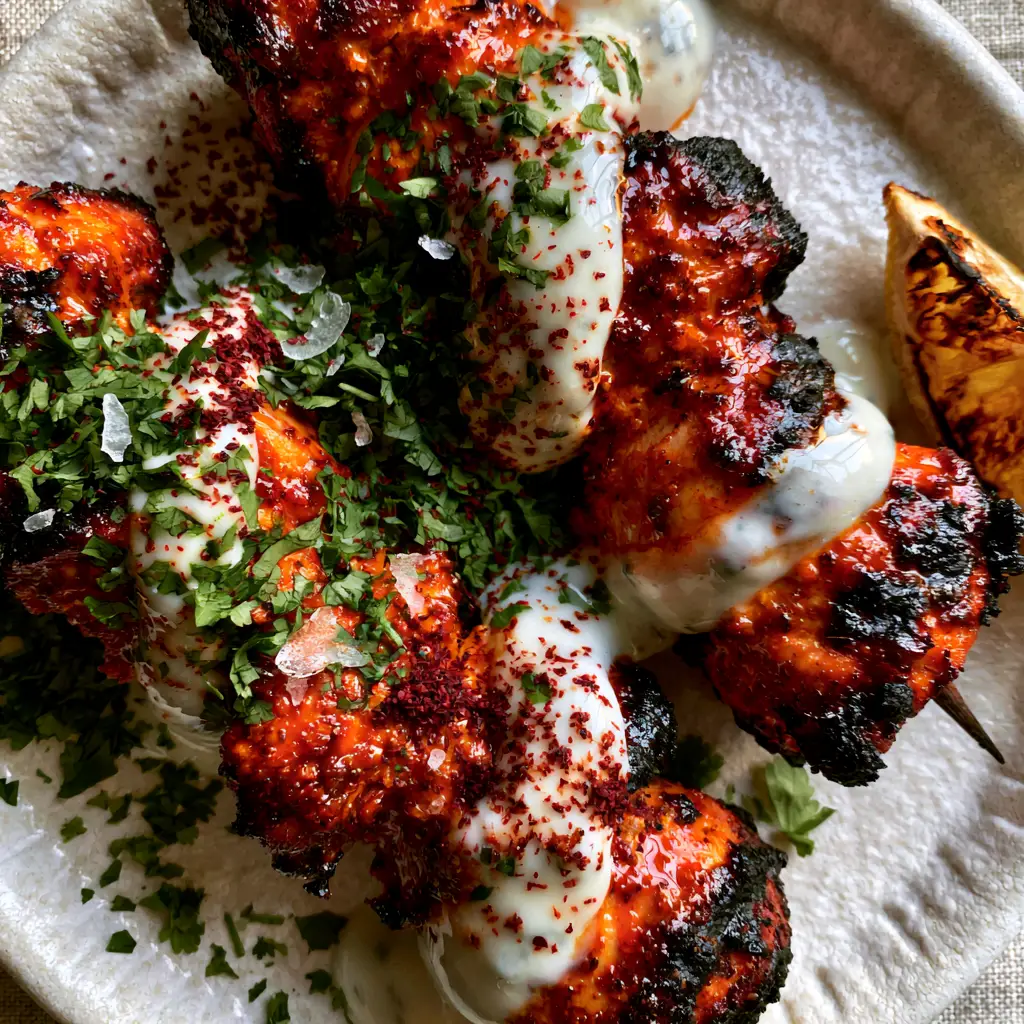
When you imagine the perfect summer meal, these Moroccan spiced grilled chicken skewers likely check every single box. From the deeply seared, dark charred edges of the succulent chicken thigh chunks to the glistening, vibrant red-orange harissa glaze that looks incredibly wet and juicy, this dish is a masterclass in flavor and texture contrast. Every bite is a journey through the spice markets of North Africa, balanced by a cooling, glossy drizzle of creamy white Greek yogurt.
Achieving the authentic look of these grilled chicken skewers requires more than just high heat; it requires the right blend of spices and a specific glazing technique. We aren’t just making dinner; we are building a sensory experience highlighted by bright green chopped cilantro, tiny flakes of crunchy Maldon sea salt, and a generous dusting of crimson sumac. This recipe is designed to help you recreate that “handheld smartphone photo” aesthetic that looks just as good as it tastes.
Why You Will Crave These Moroccan Spiced Grilled Chicken Skewers
- The Ultimate Texture Play: You get the crispy, smoky “burnt ends” of the chicken thigh paired with a sticky, honey-infused harissa glaze that stays glossy even after it hits the heat.
- Perfectly Balanced Heat: The fiery kick of the red harissa is immediately tempered by the zig-zag of thick Greek yogurt, providing a creamy mouthfeel that cools the palate.
- Aromatic Acidic Finish: The addition of ground sumac provides a floral, tart note that elevates the savory meat, while the juice from a charred lemon wedge adds a bright, citrusy punch.
- Visually Stunning Presentation: With vibrant reds, deep browns, bright greens, and snowy whites, this dish is a centerpiece that demands attention on any dinner table.
If you love this profile, you should also explore our recipe for Moroccan chicken or try these flavors in our Moroccan chicken and rice bowls for a complete meal prep solution.
The Essential Components for Authentic Moroccan Spiced Grilled Chicken Skewers
To achieve the specific result seen in our visual blueprint, every ingredient serves both a flavor and a functional purpose. We use chicken thighs rather than breasts because the higher fat content allows for those beautiful charred edges without the meat becoming dry or stringy.
Boneless Skinless Chicken Thighs: 2 lbs (907g) of thighs provide the necessary fat and connective tissue to stand up to the high heat of the grill. Cut these into uniform 1.5-inch (4cm) chunks to ensure even cooking and maximum surface area for the glaze.
Vibrant Red Harissa Paste: 1/2 cup (120ml) of high-quality harissa acts as the base for our marinade and glaze. This paste, usually made from roasted red peppers and Baklouti peppers, provides the deep crimson color and smoky heat characteristic of the dish.
Extra Virgin Olive Oil: 1/4 cup (60ml) is essential for conducting heat and ensuring the chicken sears rather than sticks. It also thins the harissa slightly so it can penetrate the meat fibers.
Honey or Agave Nectar: 2 tbsp (30ml) of liquid sweetener is the “secret” to that glistening, wet look. The sugars caramelize quickly on the grill, creating the specular highlights seen in professional food photography.
Greek Yogurt: 1/2 cup (120g) of full-fat Greek yogurt is used for the iconic white drizzle. Its thickness ensures it stays in a distinct zig-zag pattern rather than running off the meat.
Ground Sumac: 1 tbsp (8g) of this crimson spice is dusted over the finished dish. Sumac has a unique, astringent lemon-like flavor that cuts through the richness of the grilled fat.
Fresh Cilantro: 1/4 cup (15g) of finely chopped cilantro adds a pop of bright green color. The herbaceous notes provide a necessary freshness to contrast the heavy char.
Maldon Sea Salt: A generous pinch of these large, pyramidal flakes provides a tactile crunch and pops of salinity that enhance the other spices.
Lemons: 2 large lemons, one juiced for the marinade and one cut into wedges and charred on the grill. The charring process caramelizes the lemon’s natural sugars, making the juice less sharp and more complex.
Invisible Essentials: Do not forget 4 cloves of minced garlic (20g), 1 tsp (2g) of ground cumin, and 1 tsp (2g) of smoked paprika to round out the flavor profile of the chicken before it ever touches the flame.
Tools Required for Professional Grilling Results
To replicate the extreme close-up look of these Moroccan spiced grilled chicken skewers, you need the right tools to manage the fire. Wooden skewers are preferred here for their rustic look; just remember to soak them in water for at least 30 minutes to prevent them from incinerating.
A heavy-duty cast-iron grill pan or an outdoor charcoal grill is necessary to achieve the “deeply seared” effect. You need a surface that can hold significant thermal mass to create that dark crust without overcooking the center of the meat. A silicone basting brush is also vital for applying the final layer of glaze during the last two minutes of cooking to get that juicy, wet appearance.
Developing the Deep Char and Glistening Glaze
Preparing the Spice Infusion and Marinade
Start by whisking together the harissa paste, olive oil, honey, minced garlic, cumin, and the juice of one lemon in a large glass bowl. Reserve about 1/4 cup (60ml) of this mixture in a separate small container to use as the final glaze later.
Pat the chicken thigh chunks dry with paper towels—this is a critical step for browning. Toss the chicken into the remaining marinade, ensuring every crevice is coated in the vibrant red sauce. Let this marinate for at least 30 minutes, or up to 4 hours in the refrigerator for maximum flavor penetration.
Threading and Skewering Technique
Thread the marinated chicken chunks onto your soaked wooden skewers. Do not crowd the meat too tightly; leaving a tiny bit of space between chunks allows the heat to circulate, ensuring the edges get those specific dark, charred bits we are looking for.
Each skewer should hold about 5-6 chunks of meat. Once threaded, give the skewers one last light sprinkle of fine sea salt (save the Maldon for the garnish) to draw out a bit more moisture for a better sear.
Mastering the High-Heat Sear
Preheat your grill to medium-high heat (about 400°F / 200°C). Lightly oil the grates to prevent sticking. Place the skewers down and leave them undisturbed for 4-5 minutes. You are looking for the meat to release naturally from the grate; if it sticks, the crust hasn’t formed yet.
Flip the skewers and cook for another 4 minutes. During the final 2 minutes of cooking, use your basting brush to generously apply the reserved harissa glaze. This creates the “wet and juicy” look. Place the lemon wedges cut-side down on the grill at this same time until they develop dark, caramelized edges.
The Art of the Final Garnish
Remove the Moroccan spiced grilled chicken skewers from the grill and place them on a textured off-white ceramic plate to mimic our visual guide. While the meat is still piping hot, take a spoon and create a thick, glossy zig-zag drizzle of Greek yogurt across the skewers. If the yogurt is too thick to drizzle, whisk in a teaspoon of water until it reaches a ribbon-like consistency.
Immediately scatter the bright green chopped cilantro over the top. The residual heat will wake up the oils in the herb, releasing its aroma. Follow this with a heavy dusting of crimson sumac and a final flourish of Maldon sea salt flakes. The salt flakes should catch the light, creating those specular highlights mentioned in our photography brief.
Expert Tips for Perfect Moroccan Spiced Grilled Chicken Skewers
- Control the Sugar: Because the glaze contains honey, it can burn quickly. Only apply the final glaze in the last two minutes of grilling to ensure it stays vibrant red-orange and glistening rather than turning black.
- Temperature Check: Chicken thighs are best when cooked to an internal temperature of 175°F (80°C). Unlike breasts, which dry out at this temp, thighs become more tender as the collagen breaks down.
- Yogurt Consistency: For the most professional-looking drizzle, put your Greek yogurt into a small plastic sandwich bag and snip off a tiny corner. This gives you way more control than a spoon.
- The Sumac Punch: Don’t be shy with the sumac. It’s a mild spice, so a “dusting” can actually be quite generous to provide that deep red contrast against the white yogurt.
Storing and Reheating Your Leftovers
While these skewers are best enjoyed fresh off the grill to maintain the “wet” look of the glaze, they do store well. Keep them in an airtight container in the refrigerator for up to 3 days. To reheat, we recommend using an air fryer at 350°F (175°C) for 4-5 minutes to revive the charred edges without making the meat rubbery.
We do not recommend freezing the fully assembled skewers with the yogurt drizzle, as the dairy will separate upon thawing. However, you can freeze the raw, marinated chicken chunks for up to 3 months. Simply thaw in the fridge overnight before skewering and grilling.
What to Serve With Harissa-Glazed Chicken
To turn these grilled chicken skewers into a full feast, consider serving them alongside a light Mediterranean salad or a bed of fluffy grains. They pair beautifully with a grilled chicken pasta salad if you want something heartier for a picnic.
If you prefer a lower-carb option, these skewers are the perfect protein topper for grilled chicken bowls filled with cauliflower rice, cucumber, and extra olives. The acidity of the charred lemon juice acts as a built-in dressing for whatever greens you choose to serve on the side.
Frequently Asked Questions
Yes, but be careful. Breasts lack the fat content of thighs and can dry out quickly under high heat. Reduce the cooking time and ensure the glaze is applied early to lock in moisture.
Transfer the Greek yogurt to a piping bag or a small plastic bag with a corner snipped off. This allows for the clean, glossy zig-zag lines seen in the photos.
Soak the skewers in room temperature water for at least 30 minutes prior to threading the meat. This ensures they retain enough moisture to resist the grill’s high heat.
It varies by brand. Generally, it has a moderate heat. If you are sensitive to spice, look for ‘mild’ harissa or cut the paste with a tablespoon of tomato paste.
You can substitute sumac with extra lemon zest or a pinch of citric acid mixed with a little paprika to mimic that tart, floral acidity and red color.
The Ultimate Moroccan Spiced Grilled Chicken Skewers Recipe
Moroccan Spiced Grilled Chicken Skewers with Vibrant Harissa Glaze
Ingredients
Equipment
Method
- In a large bowl, whisk together harissa, olive oil, honey, garlic, cumin, and lemon juice. Reserve 1/4 cup (60ml) for glazing. Toss chicken chunks in the remaining mixture and marinate for 30 minutes.
- Thread the marinated chicken onto soaked wooden skewers, leaving slight gaps between chunks to allow for airflow and charring.
- Preheat grill to medium-high. Grill skewers for 4-5 minutes per side until deep charred edges appear and chicken reaches 175°F (80°C).
- During the last 2 minutes, brush the reserved harissa mixture onto the chicken until it looks wet and glistening. Char the lemon wedges at this time as well.
- Place skewers on a plate. Zig-zag with Greek yogurt, then top with chopped cilantro, a heavy dusting of sumac, and Maldon salt flakes.
Notes
If the yogurt is too thick to drizzle, thin it with a teaspoon of water or lemon juice.
Bringing the Flavors of Morocco to Your Kitchen
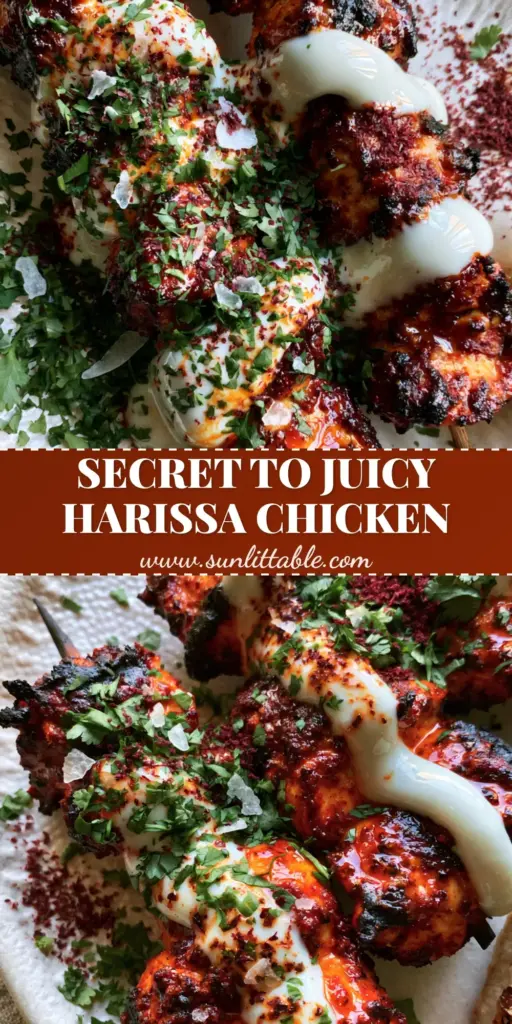
Mastering the Moroccan spiced grilled chicken skewers is a gateway to a whole new world of bold, North African flavors. The combination of the smoky harissa, the tart sumac, and the cooling yogurt creates a balanced profile that is rare in standard grilling. This dish is proof that with a few specific techniques—like high-heat charring and strategic glazing—you can create restaurant-quality food at home.
Did you try this recipe? We would love to see your results! Tag us in your photos and share this recipe to your favorite boards on Pinterest so you never lose this guide. Your comments and feedback help us continue to develop high-quality, visually-driven recipes for home cooks everywhere.